

Catch the Full Episode:
Overview
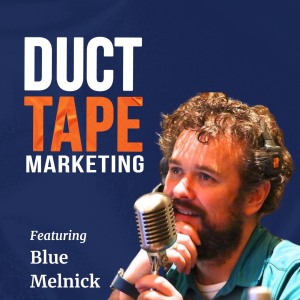
When live events went virtual almost overnight, everyone had a hard deadline forcing the change. John Jantsch sits down with Blue Melnick, co-founder of Sage Event Management, to talk about a shift he thinks is bigger and quieter: AI moving into the coaching, consulting, and course world. Melnick’s take: the opportunity is using AI to get your clients better results, faster, versus just getting more done yourself.
The conversation digs into what Melnick calls the “moment of need.” That’s the 2 a.m. moment when a client’s brain is racing and the only person available is ChatGPT or Claude, not their coach. Melnick and John talk through why specialized knowledge still beats general AI. They dig into why the gap between teaching something and a client applying it is where most coaching programs lose people. They also talk about why courses built the old way (record a video, hope someone finishes it) are giving way to something better.
This one’s for coaches, consultants, agency owners, and course creators ready to put AI to work for their clients and open up a strong opportunity for their business.
Guest Bio
Blue Melnick runs Sage Event Management with his wife and business partner, Barry Baumgartner. Together they’ve produced live events for clients including Tony Robbins and ClickFunnels. Melnick and Baumgartner also run a coaching program built around launching high-ticket offers through virtual live events, and they’ve spent the past 2 years building Obi, an AI co-producer designed to guide clients through implementation instead of leaving them to figure it out on their own. Obi is set to launch publicly in September 2026.
Key Takeaways
- AI’s shift for coaches and consultants isn’t a temporary disruption like the pandemic’s push to virtual events. AI isn’t going away, so plan for it as permanent.
- The real leverage isn’t personal productivity: Most people ask what AI can do for them, the bigger opportunity is asking what you can do with AI for your clients.
- People pay for specialized knowledge, not general information. AI chatbots offer general intelligence, but your years of specific expertise are still what clients are buying.
- The gap between teaching a client something and that client implementing it is where most coaching programs and courses lose people. Use AI to walk clients across that gap instead of handing them information and hoping.
- Build programs around the outcome, not around content volume.
Great Moments
-
- [02:09] – Melnick traces the AI shift back to ChatGPT 3.5 and the early hype around “prompt cookbooks,” before people realized AI slop was a real problem.
- [05:23] – Melnick tells the story of a former client bragging about vibe-coding a replacement for their CRM, and why he wants nothing to do with running that infrastructure himself.
- [09:18] – Melnick riffs on AGI and the “Skynet” fear everyone jokes about, then points to the real opportunity: pairing specialized knowledge with AI.
- [21:59] – Melnick shares research showing spending on education, free information online, and device access have all climbed together over the past 30 years.
- [23:30] – Melnick announces Obi’s September 2026 launch and points listeners to changecourse.ai for Barry Baumgartner’s free training.
Memorable Quotes
- “Just because you have a genius in your pocket doesn’t mean you know what to ask it.” —Blue Melnick
- “The key to AI making a huge difference is seeing what I can do with AI for my clients, not what AI can do for me.” —Blue Melnick
- “The desire for knowledge, the desire for people to take you through a specific journey never changes. What changes is the delivery mechanism.” —Blue Melnick
- “When people get a result, they don’t ask for a refund.” —Blue Melnick
Resources
- Think and Grow Rich by Napoleon Hill
- changecourse.ai – Free training hosted by Barry Baumgartner on where course creators are headed next
- Obi (AI co-producer, launching September 2026) – @obi on Instagram and Facebook
John Jantsch (00:00.984)
So, what if the next big shift in events has nothing to do with virtual versus in-person and maybe everything to do with who or what is actually running the room when it's live? Hello and welcome to another episode of the Duct Tape Marketing Podcast. This is John Jantsch. My guest today is Blue Melnick. He runs Sage Event Management with his wife and business partner Barry Baumgartner. They produce live events for the likes of Tony Robbins and ClickFunnels. And these days, Blue's focused on what's next.
an AI co producer called Obi that runs inside a live event built to help small businesses run bigger launches with less overhead. So Blue, welcome to the show.
Blue Melnick (00:41.195)
Thanks, John. I'm really, really excited to be here and talk a little bit about AI, a little bit about events if it makes sense. And yeah, just a a a fun conversation.
John Jantsch (00:47.406)
You bet.
So we all lived, well, if you were around four or five years ago, we all lived through kind of a a giant shift in how events work. a lot of people really were already doing it. A lot of people had to figure it out. what's telling you that AI is is is actually maybe even a bigger shift and not just another way that we can be more efficient?
Blue Melnick (01:17.397)
Yeah, you know, it's interesting you you mentioned COVID essentially and and the shift we all had to make from in person events to virtual events. And some of us had to make that shift really, really, really quickly. I think the biggest difference between what happened then and what's happening with AI is nobody told us at that point that the shift was coming.
John Jantsch (01:30.456)
Right.
Blue Melnick (01:41.877)
Right. Nobody was like, hey, in six months, you're not going to be able to do in person events anymore. So start preparing. and exactly, exactly. I think, and I think, you know, that's the good news. because this this shift with AI, I I I mean, I started hearing about this inside of masterminds that we're a part of inside of conversations with our clients a couple of years ago. Right. it almost was like it was with the advent of essentially,
John Jantsch (01:44.75)
Right.
Yeah. Yeah. Get a Zoom account right now.
John Jantsch (02:05.174)
Mm-hmm.
Blue Melnick (02:09.46)
Chat GPT 3.5 was really where things started to get interesting and people started to notice, coaches started to notice, and you know, people started to talk about prompt cookbooks and how you could generate a year's worth of content in 17 seconds and things like that. People soon realized that AI slop is a little bit too much of a real thing. But over the course of the last couple of years, it's gotten progressively better.
And I think for those of us who are running coaching programs, who are running live events, who are helping people with the information that we have in our heads, right? The knowledge that we have so that they, our clients, can take that knowledge and implement it in their business. AI is becoming a real tool that we can use to help get our clients.
Faster results more effectively. Yeah. Most most people talk about when they talk about AI still today, you hear most people talk about how I can be more productive as a result of AI, right? I can get more done. I can do this with it. I can do this. I can do that. I, I, I, I, I. And I really think, funny enough, I really think that the key to AI making a huge difference for a lot of people is.
John Jantsch (03:19.918)
Yeah.
Blue Melnick (03:36.852)
Is turning that and not seeing what AI can do for me, but seeing what I can do with AI for my clients. and that that's where we're seeing a huge shift. And the cool thing is, like, you know, like you, the the original question, which was how is this one different and possibly bigger? COVID went away, right? Virtual events are still a thing, but you can also now go back and do in-person events if you want.
I think AI, with AI, the genie's out of the bottle. You know, like that's that's sticking around. It's not like in a couple of years we're not gonna have AI with us anymore. I think that is just gonna become more and more and more prevalent. And I mean, not to be not to be a doomsday person, but I think clients and coaches and consultants who don't start to integrate tools that help their clients get results faster with AI.
Are going to start to see a decline in business. And it's going to be slow and gradual. For some, it may be like paper cuts, but for some, it may be much bigger than that.
John Jantsch (04:38.956)
Yeah. Yeah.
Well, and I think what's what's gonna happen, what we're telling people and coaching people on is that you know, clients are starting to figure out businesses. We work primarily small, mid-sized businesses, starting to figure out they can use some of these tools and they are sort of haphazardly using some of these tools. But I think the real winner in the coaching consulting space is gonna be the people that show them how to do it right, how to how to actually, you know, put leadership first instead of the technology first.
and that's really I think a great I think that's one of the greatest opp I've been doing this thirty years. I think it's one of the greatest opportunities for consulting. that that that's you know, that's come come before me at least.
Blue Melnick (05:23.287)
Totally. And you know, I think I I saw something interesting on on Instagram or I don't remember if it was Instagram or Facebook recently, but an old client of ours posted something online and and they were like, This is so amazing. I just vibe coded a whole new CRM and I got rid of my platform that I was spending hundreds of dollars a month on. It wasn't a big number, right? It was like
John Jantsch (05:43.054)
Right.
Blue Melnick (05:50.552)
Two, 300 bucks a month on whatever they were using. And I have to tell you, I thought to myself in that moment, I'm a bit of a nerd, I'm a bit of a nerd. I love technology. I, I mean, I'm I've been vibe coding new tools like crazy. But when I saw that, I thought to myself, that's insane. That is the one, there are a lot of things that I want nothing to do with having to manage the infrastructure of. And one of them is the backbone of my business, which is our CRM, right? Like
John Jantsch (06:19.725)
Mm-hmm.
Blue Melnick (06:20.757)
I don't want to deal with the, I mean, I know what I would have to deal with. I don't want to have to deal with the C the SMTP servers and the the all of the stuff behind the scenes. And sure you can do it, but as a you know, as a small business owner, isn't our time better spent on better things, like getting more results for our clients? Come on.
John Jantsch (06:27.789)
Yeah, yeah, yeah, yeah.
John Jantsch (06:39.96)
Yes.
John Jantsch (06:45.135)
Yeah, and I I think one of the things that people are missing that, you know, there there was this time when, like, QuickBooks is going away, Salesforce is going away, all these things are going away. I think they're only going to get stronger because we're going to get more dependent because they're building all the AI into it natively. And so all of a sudden it's like, why would you build any in fact, not only why would you, but I can't ever leave. You know, because my entire business now, you know, depends on this this tool. So I think some of the bigger SAS files.
forms are actually going to win.
Blue Melnick (07:16.699)
I I agree with you. And I also think that there's an opportunity for those of us in the coaching and consulting space to create you know, to to leverage AI and help our help our clients get the results that we provide, right? The the knowledge that we have much, much faster. my my wife calls it the moment of need.
John Jantsch (07:36.055)
It's just
Yeah.
Blue Melnick (07:43.381)
Right. When a a small business owner, an entrepreneur wakes up at two o'clock in the morning and they can't get back to sleep and their brain starts racing. I'm sure this has never happened to you.
John Jantsch (07:49.198)
Yeah. I I I had one of those last week, two thirty in the morning, yes. I I just got up, I was like, why fight it?
Blue Melnick (07:54.36)
Right. Exactly. Right. So but you're your so your brain starts racing, and who's the last person that you can call at that moment? it's our coach, right? You know, I'm not getting on the phone with my coach at that time of the day. so instead you log into chat or you log into Claude. And I think that that's an opportunity that should be taken advantage of by those of us in the coaching and consulting space. Because
John Jantsch (08:05.167)
Yeah, yeah, yeah.
You're right.
Blue Melnick (08:24.939)
Claude and Claude and Chat and you know, Grok and Gemini, all of them, they're fantastic and they're great tools. But they really don't have the experience, the expertise that that you have, John, that I have, that your listeners have, right? All of us as individuals, we've got this incredible expertise that is very specific. a long time ago, I'm sure you've read it.
John Jantsch (08:37.942)
Mm-hmm. Right.
Blue Melnick (08:51.515)
Some of us have read it a thousand times, but think of Think and Grow Rich came out, right? And there's the the segment inside that chap inside that book on specialized knowledge versus generalized knowledge. And specialized knowledge is what everybody tends to pay money for, right? That's that's why they come to us and hire us for whatever it is that you or your audience charges. It's specialized knowledge, not general knowledge. And I think it's
John Jantsch (08:55.183)
Sure, sure, sure.
John Jantsch (09:12.44)
Mm-hmm.
Blue Melnick (09:18.825)
Interesting that the big thing that AI companies are aiming towards, right? The big ones, the Frontier Labs, as you will as they call themselves, they're aiming for this thing called AGI. Right? Have you have you heard the the right? So AGI is are is it artificial? But the thing that's important is the GI, general intelligence.
John Jantsch (09:33.175)
Mm-hmm. Sure, of course, of course, yes.
Blue Melnick (09:46.068)
So everybody's like, this is gonna be amazing. We'll have this, you know, AGI. It's gonna be a moment, it's like the, you know, the moment when Skynet opens up and takes over the world. I'm like, or maybe there's an opportunity for us to use AI with our specialized knowledge and grow our business and help our clients get results. And I think that's really where where we're headed, you know? And I agree with you, it's a huge opportunity.
John Jantsch (10:08.815)
So so Yeah. So so let's talk a little bit about OB. first off, I mentioned it in the intro. what the heck is it?
Blue Melnick (10:13.408)
Mm-hmm.
Blue Melnick (10:18.231)
So a couple of years ago, Barry and I, we have a coaching program where of course we help people help people launch a high-ticket offer through the power of a virtual live event. And we we've been doing what coaches in group programs do forever, which is we take our knowledge, we teach you, and then you have to take that information, translate it to your own business, and then apply it.
John Jantsch (10:31.535)
Mm-hmm.
Blue Melnick (10:45.135)
And you know, as a coach, as a consultant, I've I've said the same thing most coaches and consultants have said for, you know, years, which is I'm responsible for my part, which is I'm gonna deliver all of the information to you. You're responsible for your part, which is the implementation. But the problem is that gap between knowledge and implementation, we think of as something that's like, it's just like like just this this far apart, right? It's so close. But for our clients, it's
It's like the Grand Canyon. It is a massive, massive, massive gap that is where people fall down. It's why, you know, courses, generally speaking, have like a sub 20% completion rate. And in our inside, we were seeing a lot of the same things inside of our coaching program. And we were like, okay, well, what if we were to use AI not to create an open ended, like custom GPT?
Right. Like this, you know, just open chat thing, but rather a way to use AI and our knowledge to guide our clients through a specific process or what we call a journey and ask them questions so that we have the context that is most important, like, hey, John, who do you serve? How do you help them? you know.
John Jantsch (11:58.095)
Mm-hmm.
Blue Melnick (12:08.075)
Where do they live in the world? What are they trying to accomplish? How are they better after they've worked with you than they were before? Things like this. And then use that context to continue to grow and build on itself with the specific thing that I want you to do next in order to get the outcome that I've promised if you work with me. So inside of our coaching program, we started to implement these AI steps.
That we're like, okay, first you're gonna teach we're gonna teach you how to determine who your right fit client is, create a profile for them, figure out what it is that they're struggling with at two o'clock in the morning, and figure out what it is that they're trying to achieve. And all using a combination of AI with our know-how, right? 20 years of having done this. Then we're gonna go from that to, okay, how is it? What's the framework that you have? What processes do you have to help your clients achieve the result?
John Jantsch (12:52.138)
Mm-hmm.
Blue Melnick (13:04.575)
Then we're going to go from that to now, how do we package your offer? Right. And all of this goes in order. And as we go from one thing to the other, we taught people how to do this previously over the course of like a six-month period. Now, what we do is we guide them through this process where they're answering a series of questions, and rather than having to apply it to figure out what their process is or
John Jantsch (13:18.22)
Right.
Blue Melnick (13:30.698)
apply it to figure out what their coaching program or their offer or their high-ticket offer is, we just provide it to them. So we teach them the know-how so they understand how to do it. But then we rather than them have to translate, rather than them having to, you know, cross that gap, that chasm that is the Grand Canyon, we literally just grab them and drag them across. Right. Maybe we zip, maybe I should I should use the analogy of a zip line. But that's what OB is. So we're using AI.
To ask our clients specific questions to help them get the result that they came to us to get in the first place. And to get that result faster, quicker, and easier. So that in a one-year coaching program, in our case, your coaching program doesn't have to be a year, your program doesn't have to be a year, but whatever it is that you're doing with them, you're able to do it faster and more effectively so that they get the outcome. Because here's the thing.
John Jantsch (14:18.509)
Mm-hmm.
Blue Melnick (14:28.363)
You know, we've all gotten refund requests from maybe a course. Like if you sell a digital course, you've you're you're used to refund requests. When people get a result, they don't ask for a refund.
John Jantsch (14:33.27)
Great.
John Jantsch (14:38.966)
Right. Right. You know, and even as somebody who has sold courses for twenty five years, you know, nothing frustrated me more than the fact that that I know that only a percentage of people were doing anything with it, whether they asked for a refund or not, you know, they they, you know, in some cases they just felt guilty. You know, it's like, it's my my decision to buy it. I just didn't use it. I mean, we've all we've all probably done that ourselves. talk talk to me a little bit about the state of the
the course and the coaching industry in general. I know that's a that's a a big topic to to to open up, but you know, one thing that of course people make lots of proclamations, but one thing people say with AI is like, well, nobody's gonna do a course now because nobody wants to watch a 40 minute video. They'll just tell AI to tell it what's in the 40 minute video. it tell me well, just from your opinion, where that's wrong, where that's right, what that means.
Blue Melnick (15:34.796)
Yeah. Well, I think there's a few things. first off, I think courses as they used to exist, let's just say yesterday, I I do think are gonna die a slow death over the course of the coming years. And for some people, they've died a really, really quick death because people just stopped buying. I think there's a number of reasons for that. one of the reasons is for those of us who have recorded courses in the past, you know, it's it's kind of like birthing a book.
John Jantsch (15:43.629)
Yeah.
John Jantsch (15:50.957)
Mm-hmm.
Blue Melnick (16:03.285)
Right. It's it's a slow process. It takes time. And once you've recorded it, you're like, I never want to do that again. Like we, I I mean, I don't ever want to stand in front of a camera with no audience and record my content again. So that's one problem. And the the flip side to that is people don't, to your point, don't want to sit through a 40-minute long video and then have to translate. So I think courses as they existed yesterday are gone. But here's the thing.
John Jantsch (16:03.733)
Mm-hmm.
Right.
Right.
John Jantsch (16:24.212)
Mm-hmm.
Blue Melnick (16:32.083)
Over the course of the last, let's say 120 years or so, and I know that's a big number for some of us, but over the course of the last 120 years in the education space, we've seen monumental changes, right? television, radio, books on tape, VHS, CD-ROMs, not in this order, obviously, the internet.
do you I don't know if you remember when Stanford released their entire course curriculum in 2012 on the internet for free. Everybody was like, my God, courses are dead. Stanford's not even charging for their stuff. Right? So this has happened over time multiple times. The the prediction of our knowledge being necessary, it's the end of that. And every single time, what happens when you go back and look at history is
John Jantsch (17:08.044)
Right.
Blue Melnick (17:25.269)
The desire for knowledge, the desire for people to take you through a specific journey never changes. What changes is the delivery mechanism. So how our clients get information or desire information or transformation is changing, right? TikTok is a part of that, you know, or Instagram reels or Facebook reels, the shorts are a part of that. AI is a part of that. They want the information and the transformation faster. So
In order to keep up, in order to keep moving forward, we as course creators have to deliver that information in a bespoke way, right? So how do you deliver customized knowledge to let's say you sell your course to a hundred people? You don't want to sit down with a hundred people and do this one to one. This is why we sell courses, right? But how do you take that information, provide them bite-sized chunks, the equivalent of an Instagram reel? So they feel as though,
That's interesting. And now they answer a few questions and they get an output that is customized to them based on what they just learned. That's a different way of learning, which is where the where your audience is right now. They're looking for that dopamine hit. They're looking for that instant gratification that, you know, scrolling, doing this with our phone provides, but they're looking for it from you because they still need it.
John Jantsch (18:31.404)
Right.
John Jantsch (18:45.524)
Yeah.
Blue Melnick (18:51.371)
Right. It's not like all of a sudden ChatGPT and Claude have gotten so much better and now everybody's getting results. That hasn't happened. Right? Just because you have a genius in your pocket doesn't mean you know what to ask it. So
John Jantsch (19:03.318)
Yeah, yeah, in fact I in fact I think people are working harder and getting less, quite frankly, out of out of that.
Blue Melnick (19:07.963)
I yeah, I wouldn't disagree with you. I saw a study recently, or I read a study yester recently that talked about how companies that have done huge implementations of AI in their business are actually seeing their workforce be less productive than they were before, which is I think surprising to many people.
John Jantsch (19:28.716)
Yeah, I think I think the I've said all along, you know, everybody talks about, all the changes in marketing and I and the one they they often forget is the fact that what's changed the most is the way people buy now or get to buy or expect to buy. And I think that what you just pointed to, consumption behavior, you know, of course is is probably what should be driving, you know, how we're thinking, you know, about them as much as content.
Blue Melnick (19:54.23)
Yeah, and you know, I was I was doing some more research. And of course, some of this research is a little self-serving, right? Because I have a solution to what I think is a problem. and I think we've found, I mean, this isn't a whiteboard solution where we're like, we think this is gonna work like this. I mean, we've been using this solution inside of our coaching program for two years. And we're seeing like massive, massive results. And the thing that I'm that I'm loving about it, truthfully,
And this is selfish, right? But I inside of our coaching program, we used to year over year, because it's a group coaching program, there's like 150 people in the program. We used to see about a 30% renewal year over year. And since we've started implementing Obi inside of our coaching program, our coaching program renewals have increased to 45% or more every time we go through a renewal cycle. And we've gone, we've been through three of them now since we released this platform.
John Jantsch (20:32.47)
Mm-hmm.
John Jantsch (20:53.494)
Hmm.
Blue Melnick (20:54.545)
And it's the only thing we're doing different. Like it's not like all of a sudden it's not cheaper. We're not one of those coaching programs where when you join the second year, it's like 50% off or anything like that. It's the same price year two as it was year one. with the same promise, incidentally. So you know, I think I think that says obviously says a lot. but yeah, I think consumption is really important. We have to see what it is that our clients
John Jantsch (20:59.062)
Yeah.
Blue Melnick (21:23.625)
Are wanting, what the audience is is looking for, and shifting to delivering it in that way so that they get the support they need in their moment of need. So this leads to just another thing that I was working on recently, just really, really quickly. I think this is an interesting one. I was looking at the amount of money spent on education, essentially on online education over the course of the last 30 years or so. And
It does this like that. Like it's, and it's just like it's hockey stick, right? It's just like keep going. So I overlaid something else over top of that, which was I was like, okay, now let's compare the amount of information that was accessible on the internet for free at the beginning of that compared to now, right? Where now is let's just say 100%, and back at the beginning is a percentage of it.
John Jantsch (21:59.393)
Mm.
Blue Melnick (22:22.463)
And when you overlay the amount of information that was free over top of the amount of information that people are spending on information, they both go hand in hand. Right. And when you overlay that with a third piece of information, which is the amount of folks who have digital devices that can access that information, all three of them go up in the same level, which is counterintuitive because you would think, everything's free on the internet. Why would they need me?
John Jantsch (22:32.717)
Yeah.
Blue Melnick (22:53.151)
And actually think the opposite is true, right? Everything's free on the internet, which is why they need you to provide the specific transformation that they're wanting rather than this general piece of information that's out there called Chat GPT or Claude. so yeah, I think that's where we're at. That's you know a little bit of a soapbox, but I'll I'll stop.
John Jantsch (23:02.806)
Okay.
John Jantsch (23:09.686)
Yeah, yeah, yeah.
John Jantsch (23:16.692)
No, I've I agree with you a hundred percent. I unfortunately we gotta wrap up today. So I know that you are launching a program coming up soon. So you wanna tell us about that, where people can connect with you, find out more about Obi.
Blue Melnick (23:30.805)
Yeah, so listen, if you want to learn more about how I think course creators are about to make a comeback, my my lovely wife, Barry Baumgartner, is hosting a free training. you can get access to that at changecourse.ai. if you want to learn more about Obi, Obi is going to be released in some in the month of September. I'm not sure when you're listening to this, but it's going to be released in September 2026.
We're using it internally. We have about 60 beta testers right now who are using it. And you can find out more by going to obai or sorry, obio, or on Instagram or Facebook at obai. So lots of ways to find out more about us. but we'd love to yeah, answer any questions you have. We're having some fun over on our Instagram channel recently. Of course.
John Jantsch (24:15.566)
Awesome.
Blue Melnick (24:25.767)
we're we're using AI to produce a lot of the content, but very openly, right? Like we're not trying to hide it, but we are trying to have a little bit of fun with some of the tools that are available to us as creators these days. So check it out.
John Jantsch (24:37.634)
Yeah. That's awesome. Well, Blue, I appreciate you taking a moment to stop by the Duct Tape Marketing podcast and hopefully we'll run into you one of these days out there on the road.
Blue Melnick (24:46.027)
Thanks for having me.
Sign up to receive email updates
Enter your name and email address below and I'll send you periodic updates about the podcast.