

Catch the Full Episode:
Overview
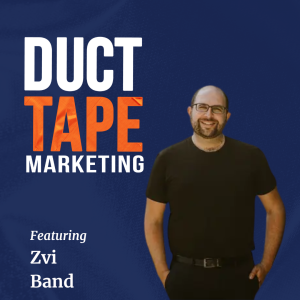
John Jantsch talks with returning guest Zvi Band about something most business owners already sense: AI can churn out a thousand warm-sounding messages before breakfast, but people can still tell when a message sounds like a machine instead of a human.
Social feeds are filling up with algorithm-picked content and AI-generated noise, which is part of why relationships feel more urgent right now. Band and Jantsch talk through where AI earns its keep, capturing details, surfacing who to reach out to, and where it falls flat: judgment, timing, the soft skills that make someone want to work with you.
This one’s for solo consultants and agency owners who know relationships drive their business but haven’t yet built a system for maintaining them. Band shares a rough decay rate for relationships, the mistake most people make once they get serious about their network, and 1 simple move you can make this week to get started.
Guest Bio
Zvi Band is the founder of Contactually, the personal CRM that helped thousands of professionals stay on top of their networks (before Compass acquired the company in 2019). He wrote Success Is in Your Sphere: Leverage the Power of Relationships to Achieve Your Business Goals, and he’s spent the years since building Relatable, an AI-powered personal CRM built around a different premise: people aren’t leads. Band joined the Duct Tape Marketing Podcast once before, years ago, and returns now to talk about what’s changed since.
Key Takeaways
- AI-assisted note-taking can free up mental bandwidth, so you’re fully present in a conversation instead of mentally cataloging details to remember later.
- Relationships have a rough 6-month decay window. After that, people fall out of mind, not from anyone’s fault, but from being flooded with too much noise.
- Before adopting any relationship-building system or tool, get clear on why those relationships matter to you right now, since that “why” changes as your goals shift.
- Treat relationship maintenance like gardening: a few contacts a day beats 1 marathon organizing session that burns you out and goes stale again by morning.
- As AI takes over administrative tasks, soft skills, like noticing whether someone genuinely connects with you and asking the right follow-up questions, become the real differentiator.
Great Moments
- [00:01] – Jantsch opens with the line that frames the whole episode: people can tell when a message came from a prompt instead of a person, no matter how well the AI is trained.
- [02:43] – Band explains why relationships feel more urgent now: better-tuned algorithms are hiding people’s posts from each other, and AI content overload is pushing people to tune out entire channels.
- [06:09] – Band draws the line between Contactually’s original mind-share, warm-leads framework and Relatable’s premise that people aren’t leads.
- [12:45] – Band describes Relatable as a relationship OS built to answer 3 questions: who do I know, who should I talk to today, and what should I do to nurture that relationship?
- [20:04] – Band walks through organizing a messy contact list: get everyone into 1 place, then work through a handful of contacts every day instead of a single weekend marathon.
Memorable Quotes
- “The more burden AI can take off our plate, the more cognitive capacity we have to care.” — Zvi Band
- “AI can take the transcript and capture the details, but it’s not going to pick up the little things, like whether someone smiles when they’re talking to you. Only a human notices that.” — Zvi Band
- “When someone finally decides to take their network seriously, very few make the jump from treating it like a New Year’s resolution to treating it as something they strategically execute on a regular basis, with a real system behind it.” — Zvi Band
- “My guidance for people is to start with a clear why. Why is building relationships worth my time, my money, and the hours I could be spending with my family or elsewhere in my business?” — Zvi Band
- “The magic number I’ve seen for how long you can go without staying in touch is around 6 months. Once you go past that, it’s nobody’s fault, people are just inundated with so much messaging that you fall out of their mind.” — Zvi Band
Resources
- Success Is in Your Sphere: Leverage the Power of Relationships to Achieve Your Business Goals (Book on Amazon)
- Relatable’s Website
- Zvi Band’s Website
- Your Network Starts With You on Substack
John Jantsch (00:01.57)
So everybody knows by now AI can write, I don't know, a thousand warm sounding messages before breakfast. People can feel the difference though between a message, I don't know what it is, that that came from AI. No matter how well that AI is trained, you can generally feel that that that it came from a prompt. the businesses that pull ahead over the next few years will use AI to remember more people, perhaps, and still bring their own judgment to what they say to each one of those people. Hello and welcome.
To another episode of the Duct Tape Marketing Podcast. This is John Jantsch. My guest today is Zvi Band. He is the founder of Contextually. in fact, I think he was on this show many years ago. when he founded that, the personal CRM that helped thousands of professionals stay in touch with people who mattered before he sold that business to a compass to Compass in 2019. he wrote the the book Success is in your sphere: leveraging the power of relationships to achieve your business growth. And he spent
years really ever since building relatable, a new AI powered personal CRM built on a simple idea that let AI remember people and bring your own judgment to how you show up for them. So Z V, welcome back to the show.
Zvi Band (01:16.305)
Thanks, John. It's been a number of years. It's been a few years since I've seen you in person here in D C, but it's been a few years since our show. So great to be back here.
John Jantsch (01:24.684)
So remind me again if I got this wrong. Don't people just call you Z?
Zvi Band (01:29.279)
You know, honestly, like some people care about the pronunciation of their first name, but anything with a Z or an S in my general direction, I'll respond. So you could have called introduced me a Zivy and I wouldn't have corrected you.
John Jantsch (01:35.31)
Yeah.
Well, I wouldn't have gone there, but how how do you actually say is spelled Z V I?
Zvi Band (01:47.441)
It's it's spelled ZVI. in American it's pronounced ZV, but the people but people who speak Hebrew and know the proper pronunciation will have c will call me ZV, like T S V I. but that's not how my great great grandfather spelled it.
John Jantsch (02:01.07)
C. Yeah, yeah, yeah, yeah.
John Jantsch (02:05.71)
So so I I'm assuming that can't that's like an Exodus name or something.
Zvi Band (02:11.184)
Yeah, exactly. Like nowadays it's like it's mainly used by i by Israelis, but I was born in Boston, which is obviously even more confusing. but yeah, it's my great grandfather's name.
John Jantsch (02:16.962)
Yeah, yeah.
Yeah.
Awesome. Well, so everybody knows relationships matter in business. I don't think you can find too many people that would that would argue with that idea. so what's what's changed in the last year or two in your in your mind that kind of makes this conversation about relatable and about relationships feel more urgent?
Zvi Band (02:43.068)
Yeah, it's a great question. I I think about this a lot because on one end, you know, there's, you know, Jeff Bezos has this line of like always focusing on what won't change. And yes, we are deeply social creatures and we will always rely on human beings and human relationships for various different aspects of our life. What I what I think what has changed to your point is everything else, right?
So, case in point, you know, if you and I were to open up LinkedIn, we are no longer seeing, you know, individual posts by people that we know and trust. But two things have happened. One, algorithms gotten have gotten better at feeding us information that we think is going to be better and more relevant for us. So we're no longer seeing what John's posting. Instead, we're seeing what Zve thinks.
What they think ZV will want to see, which includes like other stuff and ads and everything like that. But then the other thing that's happened is to your point around AI generated content, the sheer amount of content and information and signal being thrown at us is more overwhelming than ever. And we are having a hard time discerning what's human, what's not. And unfortunately, I think what more and more of us are doing.
John Jantsch (03:57.923)
Yeah.
Zvi Band (04:06.822)
Is we're just choose choosing to shut off the signal, right? If we're getting s inundated with so much noise, we're saying, Hey, how can I unsubscribe from this channel in general? And what comes in? Relationships.
John Jantsch (04:20.204)
Yeah, it's interesting. I mean, th there are even devices that are are now like promoting themselves as we'll block out all the other stuff that, you know, there was a commercial. I was watching a football game last time. There was a commercial and this woman was having coffee with a friend, obviously, and they had all these like other you know distractions like outside the coffee shop coming and but she was able to just block them out with her phone, you know, some setting on her phone. And I think that
You know, what I'm getting at is I mean, I think we're actually now having to use devices, you know, to to to really shut all that that noise out as well.
Zvi Band (04:56.86)
Yeah. And I think as part of that, that's why I think, you know, there's, you know, and I think about this from a marketing perspective too. I think one of two things are going to happen. we will rely on relationships, or we're simply gonna go to an algorithm to get the exact information we want or need, right? Like why, for example, would I search a recipe blog and go through pages and pages of ads, for example.
John Jantsch (04:58.222)
Please.
John Jantsch (05:17.718)
Yeah, yeah, yeah.
Zvi Band (05:25.714)
when I can just, you know, ask ChatGPT for a recipe. Or if John says, hey, make this, I'll, I'll make what John has. And there's so many examples. So I think we're either going to rely entirely on on AI for answers. And then on the other side, we're going to rely on relationships as well.
John Jantsch (05:33.942)
Yeah.
John Jantsch (05:44.628)
So contractually contextually, sorry, that was almost forty in a way. was built really on a framework of kind of social capital, but in the end it was it was kind of about, you know, your warm leads, you know, and and nurturing them and and I I get the sense that relatable's built around a little different starting point or different philosophy. Would that be accurate?
Zvi Band (06:09.66)
Yeah, you know, so I I think that the core idea of both products, both contacts, which we sold and now relatable, is this idea of mind share that we all have people in our lives that we know, like, and trust and want to make sure that those people know, like, and trust us continuously. However, you know, we only can retain a certain amount of information in our head. And so if we
John Jantsch (06:11.48)
Yeah.
Zvi Band (06:37.128)
Can't remember who we what we had for breakfast two weeks ago, we're not also going to remember like the people that we met. So I think the core of that is still the same. contaction, obviously being built back in 2012, had relied on the technology that we had nowadays had back then and the tools. What I'm eager and what I've been really diving into with relatable over the past few years is how can AI actually help us be more and more human?
and take a lot of the admin burden of building maintaining relationships off our plate so we can do what we do best, which is building relationships.
John Jantsch (07:19.96)
So y you know, I think that this theme, I mean, a lot of people are saying, you know, that that what you just say that I've I've heard from numerous people that have been on this show. You know, it's gonna free us up to you know to be more human. but you still have to have the caring part of being human, right? and and I think that still a lot of people treat relationships as
transactional or I'm going to, you know, keep this relationship going because I think at some point you can send me business. so how do you how can a AI make can AI or can it not you know help us with that part of of actually caring?
Zvi Band (08:07.868)
Yeah, absolutely. the way I think about it is I think the more, you know, in two ways. One is the more burden AI can take off our plate, the more cognitive capacity we have to care. So, like one of my favorite examples is I'm a huge fan of meeting recorders. I have a meeting recorder join every one of my meetings. I have it joy drop into my notes.
John Jantsch (08:22.849)
Right. Yeah.
Zvi Band (08:34.354)
My notepad, I have it drop into relatable and extract the personal details. Like for example, that John, like, yo, you take four day weekends. and all those details become really helpful because that means that the next time I'm on a call with you, I could be hands off. I'm not like I'm not writing down a bunch of notes. I can be fully present and focused on you and not thinking in my head, okay, like let me write these notes, let me write these details, let me think about these follow-ups.
And then later on, you know, because that brain now has all the information, all the connections that I've ever had, it can say, Hey, you know, I I met someone who's actually thinking about taking Fridays off, but is really worried about the jump. maybe John would actually be like a great person to meet, right? and so that's where I think it can actually extend our cognitive capacity and allow us to care as much as
John Jantsch (09:28.981)
Mm.
Zvi Band (09:31.836)
I think we'd like but oftentimes fall short.
John Jantsch (09:35.083)
Yeah, and and a and you're saying AI's doing a lot of that because it's it may be capturing things that you wouldn't even necessarily note, and then is able to cross reference those, in a lot of ways. Is that is that kind of how you're describing that? Yeah.
Zvi Band (09:48.213)
Exactly. That that's that's one that's one of the perfect examples. Now to build on that though, I think this is where because the admin burden is taken off, like we you and I don't have to be sitting there like court court scenographers, like taking every like word that happened in a conversation. We can then not only be more present, but like actually allow ourselves to really start noting things that wouldn't necessarily pop up otherwise. Like
John Jantsch (09:59.257)
Mm-hmm.
John Jantsch (10:03.884)
Right.
Zvi Band (10:17.862)
I find myself on calls these days actually like focusing more on like, do I like this person? You know, do is there some kind of connection? Do I see that person smile when they're talking to me? and AI can obviously take the transcript and can have the details, but it's not going to pick up those little bits and pieces that I think only a human can. So I actually think like the the the soft skills are gonna matter even more.
John Jantsch (10:25.166)
Mm.
Zvi Band (10:46.808)
because of course, you know, anyone can get on a call and, you know, have a note taker, but it takes like some you know, someone with real skills to get on a call and ask the right questions and to go into the right detail and really tell, like, is there a something here?
John Jantsch (11:03.394)
Yeah, I heard somebody say one one time that, you know, we don't need I mean, we don't need IQ anymore because you know, we've got we've got the world's IQ, right? at our fingertips and that that EQ is actually, as you sort of mentioned, the soft skills i is actually going to be the differentiator. and I think that you I think what you just hit on is a very sort of practic practical application of that.
Zvi Band (11:29.0)
Absolutely. And that's why I think like in you know, what I spend a lot of time talking and speaking about now is things like instead of, you know, recording notes and then like how to log in into your database, just assume that's gonna happen. And instead it comes more down to like the soft skills, like how to have a conversation. You know, even just what you and I did where you open up a call, not asking, Hey, how's your day? How's the weather? How's traffic? Blah, blah, blah, but actually like
John Jantsch (11:48.802)
Mm-hmm.
Zvi Band (11:58.515)
what's been the highlight every week so far. Cause that completely changes the direction of a conversation and like creates a much more deeper personal relationship. and that's I think gonna matter even more in the coming years.
John Jantsch (12:00.749)
Yeah.
John Jantsch (12:12.748)
So a lot of my listeners are solo consultants, solo practitioners, maybe they run the whole show at their at at their business. how does a tool like I mean, is is it say is is it how do you character characterize your tools? Is it an AI assisted relationship tool? Is it a personal assistant? I mean, how how would you characterize it? And and then really my my question is, you know, what would the best way for that solo, you know, entrepreneur who's
you know, running a business use relatable.
Zvi Band (12:45.104)
Yeah, absolutely. And so the the way that relatable is built, it's built as a relationship OS, which means it can prov has all the components you need to build and maintain deep relationships. and yes, I'm a solopreneur myself. So I have to maintain a lot of different relationships for you know for my business and my interests and all the investments I make and everything like that. what
You know, at a core, what it does is it brings in all of your relationships from all sorts of different places and helps you stay organized. And then every day gives you actions that you can take to be able to better maintain those relationships. and John, I think the real switch behind it, and I think this is what I coach a lot of people into, is I think you and I, and I think everyone knows and agrees, and this is what you said at the top of the call that relationships are really important.
John Jantsch (13:22.114)
Mm.
Zvi Band (13:39.881)
But very few make the jump from being it being like a New Year's resolution to it being like something I strategically execute on a regular basis and have a system behind. And so the way I think about it is relatable is the scaffolding to help you start treating your relationships as more of a system rather than like a I should get to it tomorrow kind of thing.
John Jantsch (13:46.828)
Yeah.
John Jantsch (14:05.783)
Well yeah, or even in my case, you know, a lot of times I'll say, I've got I've got an hour today. I'm gonna I you know, I need to reach out to some people. You know, I haven't talked to you for a l and and I then I sit there and say, But like who? Do I wanna go through my entire you know, entire you know, contact list and try to figure it out? And I and I'm guessing that relatable actually has some strategic
or ability to be strategic about, hey, here's who you should be. Or if you tell me what you're trying to do or what kind of relationships you're trying to further, you know, here's who you should be talking to. i is it is w is it safe to say it can go that far?
Zvi Band (14:42.748)
Exactly. And I think it's purpose built for the exact thing that you have that you brought up, where like you have the desire for and the energy to be able to build relationships, but what should I do right now? Right. The three questions we always help make sure that we, our software, can answer is who do I know? Who should I talk to today? And what should I do to nurture that relationship? And so we can help surface things like
Hey, you know, here are some past clients that you really like who you haven't spoken to in three months. Here's an email that we can help you draft that you can reach out to them today. if you're traveling to Dallas, you say, Hey, who are the people that I know and like in Dallas that I haven't spoken to in a year? we can help you answer those questions. you can say, all right, who are the digital marketers that I know and then I have a really good relationship with? Great. Let me go ahead and email all of them a
John Jantsch (15:13.335)
Yeah.
John Jantsch (15:27.303)
Mm. Yeah.
Zvi Band (15:37.758)
question if I wanted to. So for all the things around your relationships and all the goals and jobs to be done you have, it oftentimes comes down to like, well, who do I know and how do I reach out to them? And that's what we've really spent all this time like really trying to answer.
John Jantsch (15:55.946)
What do you what do you surmise? And maybe you actually have data that could prove this, the decay rate of a relationship is. I mean, like a I I mean, there are different kinds of relationships, but like somebody that you you want to make sure that they think of you when like that perfect opportunity, you know, presents itself. you know, what what would you say what I'm really getting at is do I need to contact you three times a year? Do I, you know, what what have you seen?
Zvi Band (16:23.794)
Yeah, it's a it's a really interesting thing. And there's I would say there's a a key input for that, which is how unique are you, right? You know, if you are the only person who does what you do, right? You know, and you've not only are good at that, but you've also been great at building rapport with people. I've seen people reach out, you know, sometimes like you know, 10 plus years later because
John Jantsch (16:39.98)
Yeah.
John Jantsch (16:53.313)
Yeah.
Zvi Band (16:53.67)
You are known as that person. For most people who let's face it like yo, have some type of whether some kind of competition, or you know that like the per people in your network oftentimes know multiple people, like let's say a realtor, the magic kind of line I've seen is around six months. Right. You know, that once you go past six months, especially these days, they are it's and it's no fault of you or for them, but just.
John Jantsch (17:06.593)
Yeah, yeah. Yeah, yeah, yeah.
John Jantsch (17:12.545)
Yeah, okay.
Zvi Band (17:21.64)
We are being inundated with so many people and so much messaging and marketing. So again, I can't remember what I had for breakfast, you know, last week, let alone, you know, the people in my network. So yeah, if someone asks me, like, yo, hey, do you know a a really great realtor? I'm like, I probably do, but I just kind of go by the last person that I had coffee with.
John Jantsch (17:23.137)
Yeah. It's just
John Jantsch (17:29.485)
Yeah.
John Jantsch (17:40.161)
Yeah, yeah.
Yep. Yep. Yep. So when you've seen somebody say, I'm you know, the new use resolution idea, you know, I'm gonna start taking this seriously, you know, I'm gonna jump in with both feet, I'm gonna, you know, sign up for relatable, I'm gonna do all the things, where do they typically go wrong?
Zvi Band (18:01.286)
Yeah. You know, honestly, I I would say it's usually one of the first steps because I think, you know, listen, you and I are nerds. Like we tend to like say, like, like what what's a cool tool I can use or a cool prompt I can try or something like that. I actually find that oftentimes one of the first things they do to get tripped up is not have a clear why in mind. Like we all know relationships are important, but why are relationships important for you today?
John Jantsch (18:22.167)
Yeah.
Zvi Band (18:28.796)
So, for example, when I was building up contactually, I very clearly knew that my network was critical for me to help get more funding for a company, to stay in touch with key hires, to stay in touch with our key customers and prospects and the people that I wanted to work with, you know, months or years down the line. Since selling it, obviously my priorities have changed. Now I find myself wanting to.
Stay in touch with other founders, stay in touch with people who inspire me, stay in touch with people that I generally just like and I like want on the entrepreneurial journey with me. And so, because those are different whys, obviously the the types of relationships that I put proactive time and effort, those shift over time. So, my guidance for people is first and foremost, have that clear why.
John Jantsch (19:24.001)
Mm-hmm.
Zvi Band (19:24.796)
And once you have that clear reason, like why is this worth my time? Why is this worth money? Why is this worth all the time what I could be spending with my family or elsewhere in my business? Once they have that why, then like the other aspects tend to fall in place very quickly.
John Jantsch (19:42.904)
So if if listeners are a little like me, I probably have contacts in a lot of places. you know, so and and worse than that, I've got contacts on LinkedIn that eighty percent of I don't know why I'm in contact with or you know, a relationship or or follower or whatever it is. how does somebody start sort of organizing that chaos?
Zvi Band (20:04.722)
Yeah, it's a great question. so the first thing that you need to do is get all of your contacts into one place, whether you're using relatable or another CRM, or even just like exporting all of your contacts out of your email and Google contacts and LinkedIn and putting them on a spreadsheet, whatever. then make a habit of every day going through a few contacts. and I say make a habit of it is because
John Jantsch (20:14.381)
Mm-hmm.
Zvi Band (20:34.042)
One of the other tripwires that I've seen people fall into, John, is every like that some people will spend, like, for example, all Sunday, you know, six hours organizing their database. And they're going like, good, I did it. Thousands of contacts. And then what happens next morning? Someone emails them. Right. And all of a sudden, like, you know, that database is out of date. And so I find it's actually really helpful from the very beginning to establish a regular routine of just every day.
John Jantsch (20:46.303)
Yeah.
John Jantsch (20:50.156)
Yeah.
John Jantsch (20:53.535)
Ha ha ha.
Yeah.
Zvi Band (21:04.114)
you know, working on your database, just like gardening, just like a little bit on a regular basis. It's an it's a task that will never end. But that's the great thing because if you do, you know, three contacts a day, you know, over the course of a year, you've gone through a thousand contacts. Whereas if you spend a weekend on it and you go through a hundred, you're exhausted and you never want to do it again. And then all of a sudden you you've lost touch with people.
John Jantsch (21:06.677)
Mm, mm. Yeah.
John Jantsch (21:27.375)
Yeah.
Yeah, yeah, yeah, yeah. So we we actually are are getting close to needing to wrap up. Why don't you give me the kind of the if somebody said, Well, you've been talking about relatable, but like what is it actually?
Zvi Band (21:44.198)
yeah, sure. So relatable is a personal relationship OS. Think of it as a CRM with a lot more in it that is built around helping you build and maintain the relationships that are most important for you. you can sign up at bemoreelatable.com, but the key idea here is that if relationships are important for you, then it's time to put real systems in place, not just tools like relatable, but actual like
structures and habits and processes to build and maintain relationships.
John Jantsch (22:16.501)
Awesome. Well, Zavee, it was great having you stop by the Ductate Marketing Podcast again. is there on top of where you mentioned where relatable is, is there anywhere else you'd invite people to connect with you or find out more about your work?
Zvi Band (22:30.632)
yeah, absolutely. Well, you know, my name's V Band. so far there's only one Zv Band out there that I know of, and that's me. So you can search for Z band and find all the different projects and connect with me on LinkedIn, et cetera. and then if you are also interested in learning more about the tactics and mindset around building relationships, I have a sub stack called Your Network Starts With You that you can easily look up.
John Jantsch (22:55.085)
Awesome. Well again, appreciate you stopping by and hopefully we'll run into you one of these days out there on the road.
Zvi Band (23:01.513)
Thanks, John.
Sign up to receive email updates
Enter your name and email address below and I'll send you periodic updates about the podcast.