

The traditional agency model is no longer built for today’s small businesses. In this article, Sara Nay explains the anti-agency model and how strategy-first marketing, fractional leadership, and AI can help businesses own their marketing instead of outsourcing it blindly.
For the last 15 years, I have lived inside the agency world.
I have been an intern, a community manager, an account manager, a fractional CMO, and now the CEO of Duct Tape Marketing. I have seen this industry from nearly every angle. Inside the work, inside the relationships, and inside the pressure that agencies and clients both feel.
Here is the truth I could not ignore anymore.
The traditional agency model is broken.
Not because agencies are bad.
Not because marketers do not care.
But because the model itself no longer serves small businesses or the agencies trying to support them.
That realization is what led me to write Unchained: Breaking Free from Broken Marketing Models and to articulate what I call the anti-agency model.
Let me explain what I mean and why this moment matters more than ever.
Living the Agency Reality From Every Side
Over the years, I experienced the same challenges many agency owners quietly struggle with.
- Constant scope creep
- Difficulty scaling profitably
- Burnout among team members
- High client expectations with limited clarity
- Pressure to do more faster and cheaper
At the same time, I have spent years on the sales side of our business talking with hundreds of small business owners. I heard the same frustrations over and over again.
“Marketing does not work.”
“I am paying an agency, but I do not know what I am getting.”
“I feel disconnected from my own marketing.”
Both sides were frustrated, and neither side was wrong.
The system simply was not designed for the reality we are in now.
What I Mean by the Anti-Agency Model
Let me be clear. This is not anti-agency.
We are an agency. We have been one for over 30 years. I love agencies and believe they play a critical role.
What I am against is a model where agencies:
- Hoard execution
- Operate as black boxes
- Replace ownership with dependency
- Compete on volume instead of leadership
The anti-agency model is anti that approach.
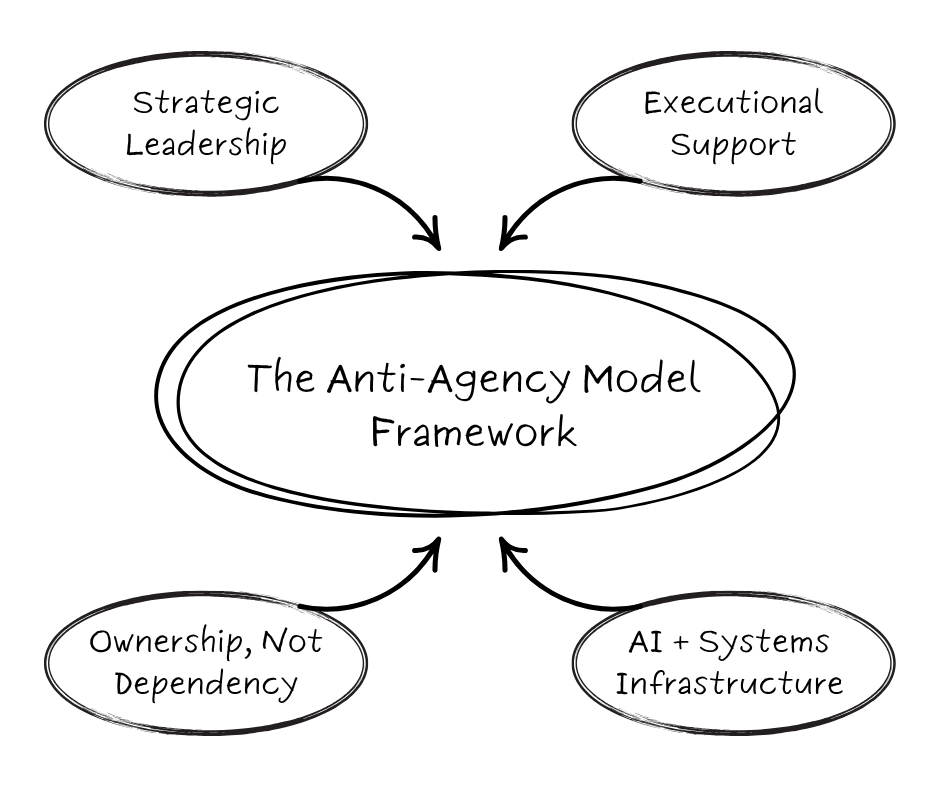
It is a strategy-first, AI-enabled approach that helps small businesses stop renting their marketing and start owning it, while agencies evolve into leadership partners instead of outsourced task machines.
AI Changed the Rules Whether We Like It or Not
Before AI, it made sense for agencies to own execution.
- Content
- Social
- SEO
- Ads
Small businesses simply did not have the resources or tools to handle that work internally.
That is no longer true.
AI has fundamentally changed what is possible for small teams. Today, small businesses can:
- Keep execution closer to home
- Operate with leaner internal teams
- Use AI systems to handle heavy lifting
- Focus human effort on thinking, judgment, and leadership
Here is the key.
AI does not replace strategy. It makes strategy more important.
Timeless Marketing Principles Still Matter
One thing has not changed, despite all the technology.
Marketing fundamentals still matter.
In Unchained, I spend a lot of time reinforcing timeless principles, including:
1. Deep Ideal Client Understanding
AI without clarity just creates noise.
If you do not deeply understand your client’s fears, motivations, and what keeps them up at night, AI will happily produce generic content that sounds like everyone else.
Strategy comes first. Then you train your tools.
2. Core Messaging and Differentiation
Your messaging, what makes you you, must be defined before automation enters the picture.
Otherwise, AI accelerates inconsistency instead of clarity.
The foundations have not changed.
The way we use them has.
The Real Danger of AI-First Thinking
The biggest mistake I see right now is businesses jumping straight into tools.
AI amplifies whatever already exists.
If you have chaos, it amplifies chaos.
If you lack clarity, it multiplies confusion.
That is why we now say:
Strategy before tactics.
Strategy before technology.
Ask these questions first.
- What is the business trying to accomplish?
- What role should marketing play?
- How should the team be structured?
- Where does AI actually help us move faster without losing direction?
Only then do tools make sense.
Why Fractional Marketing Leadership Matters More Than Ever
Most small businesses were never able to afford a traditional marketing org chart.
- A CMO
- Plus channel specialists
- Plus support staff
AI changes that equation.
Today, the most effective structure looks like this.
- Fractional marketing leadership responsible for strategy, budget, direction, and metrics
- A lean internal team
- AI systems supporting execution underneath
This allows founders to stay in their zone of genius. Selling, leading, and growing. Not becoming accidental CMOs.
And no, the title does not matter.
Call it a fractional CMO, marketing leader, strategist, or advisor.
What matters is that someone is leading marketing strategically, not just taking orders or doing tasks.
What This Means for Agencies
If you are an agency reading this, here is the hard truth.
Execution-only services are becoming a race to the bottom.
AI will continue to get better.
Small businesses will continue to bring more execution in-house.
Margins will continue to compress.
The opportunity is not to compete against AI.
The opportunity is to lead strategy, elevate humans, design systems, guide internal teams, and work with AI instead of against it.
Agencies that evolve into leadership partners will thrive.
Those that do not will struggle to stay relevant.
Two Steps You Can Take This Week to Start Owning Your Marketing
If you are a business owner and this feels overwhelming, start here.
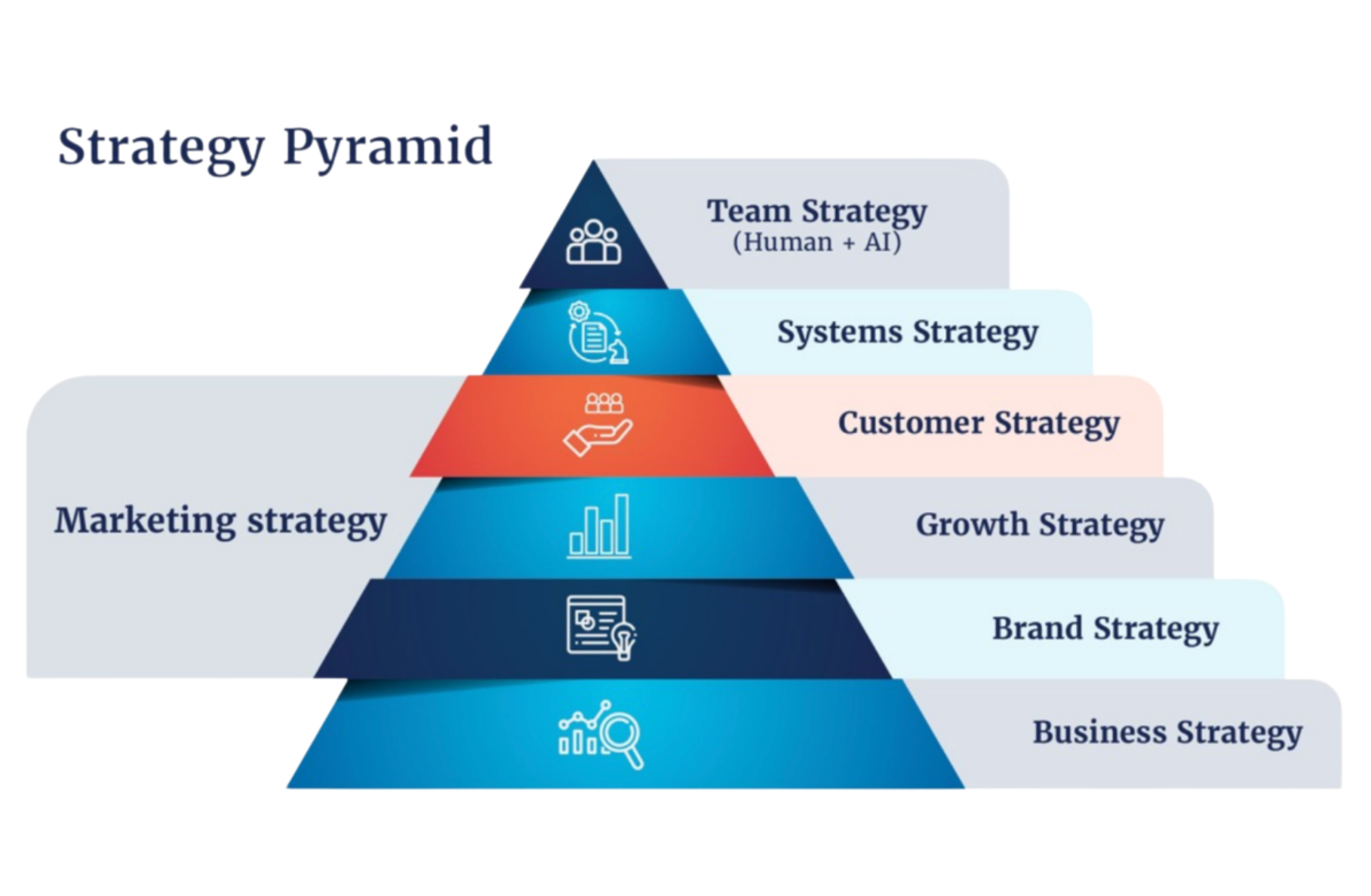
1. Revisit the Marketing Strategy Pyramid
Clarify your business goals, your marketing strategy, and your team structure.
Do this before tools. Do this before tactics.
2. Audit Your Current Relationships
Ask yourself:
- Do we have visibility into what is happening?
- Do we understand why we are doing what we are doing?
- Are we in control, or are we in the dark?
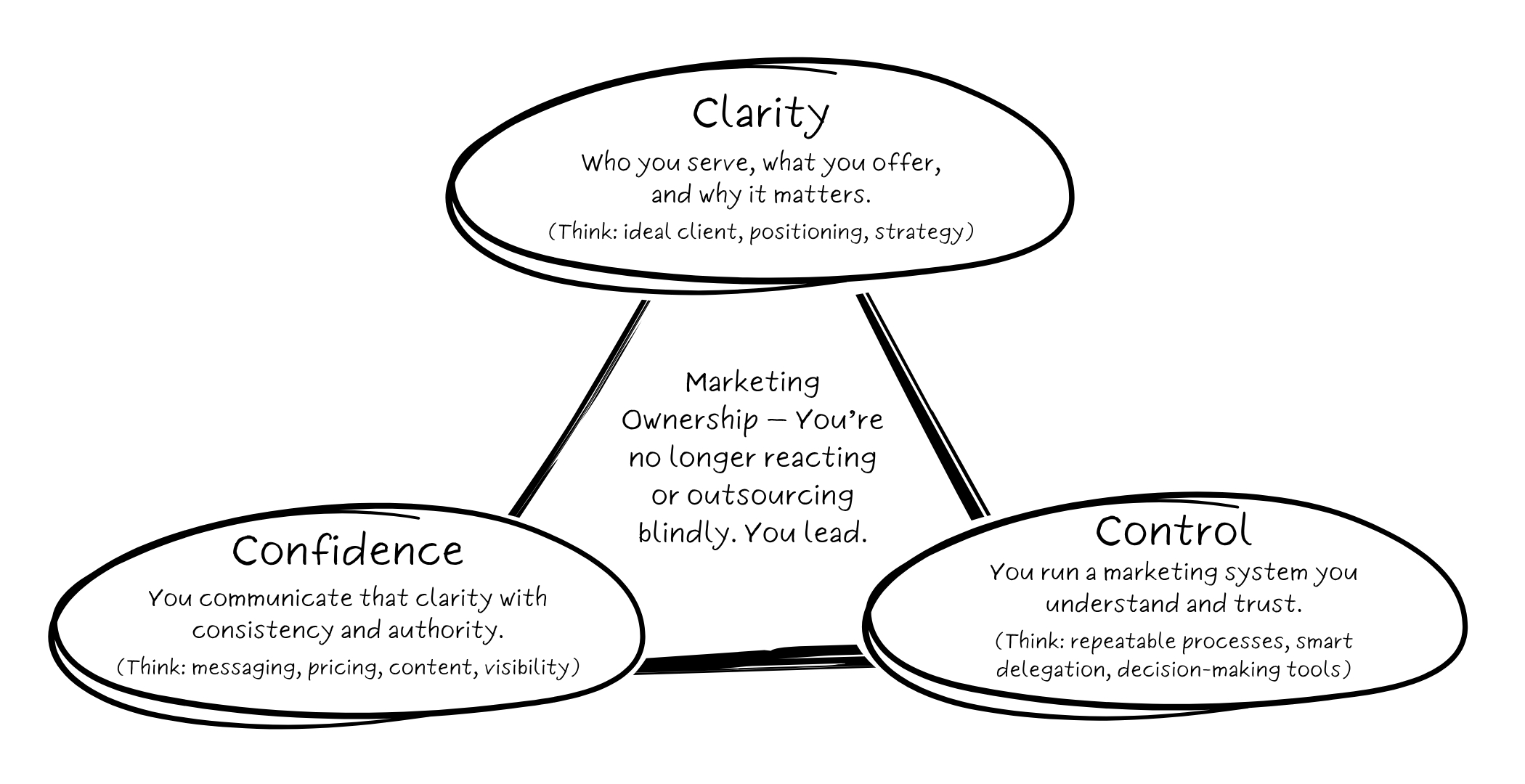
Ownership starts with clarity.
AI Is Not About Replacing People. It Is About Elevating Them.
One of the most powerful exercises we have done internally is asking our team to identify:
- Human-led skills
- AI-assisted skills
- Tasks that could be fully automated
Not to squeeze more output, but to help people focus on work that matters more.
That is how businesses, and careers, get future-proofed.
Final Thought
This moment is not about choosing between humans and AI.
It is about choosing between ownership and dependency.
The businesses that win will not be the ones chasing every tool.
They will be the ones leading with strategy, clarity, and intention.
That is what Unchained is really about.
If you want to learn more, visit unchainedmodel.com or connect with me on LinkedIn.

Sara Nay is the CEO of Duct Tape Marketing and the author of Unchained: Breaking Free from Broken Marketing Models. With more than 15 years of experience in the agency world, she has worked in nearly every role, from intern to fractional CMO, giving her a rare, full-spectrum view of what works and what no longer does in modern marketing. Sara is a leading voice in strategy-first marketing and the evolution of the agency model, helping small businesses and agencies stop renting their marketing and start owning it through clear strategy, strong leadership, and practical use of AI.