

Listen To The Full Episode:
 Episode Overview
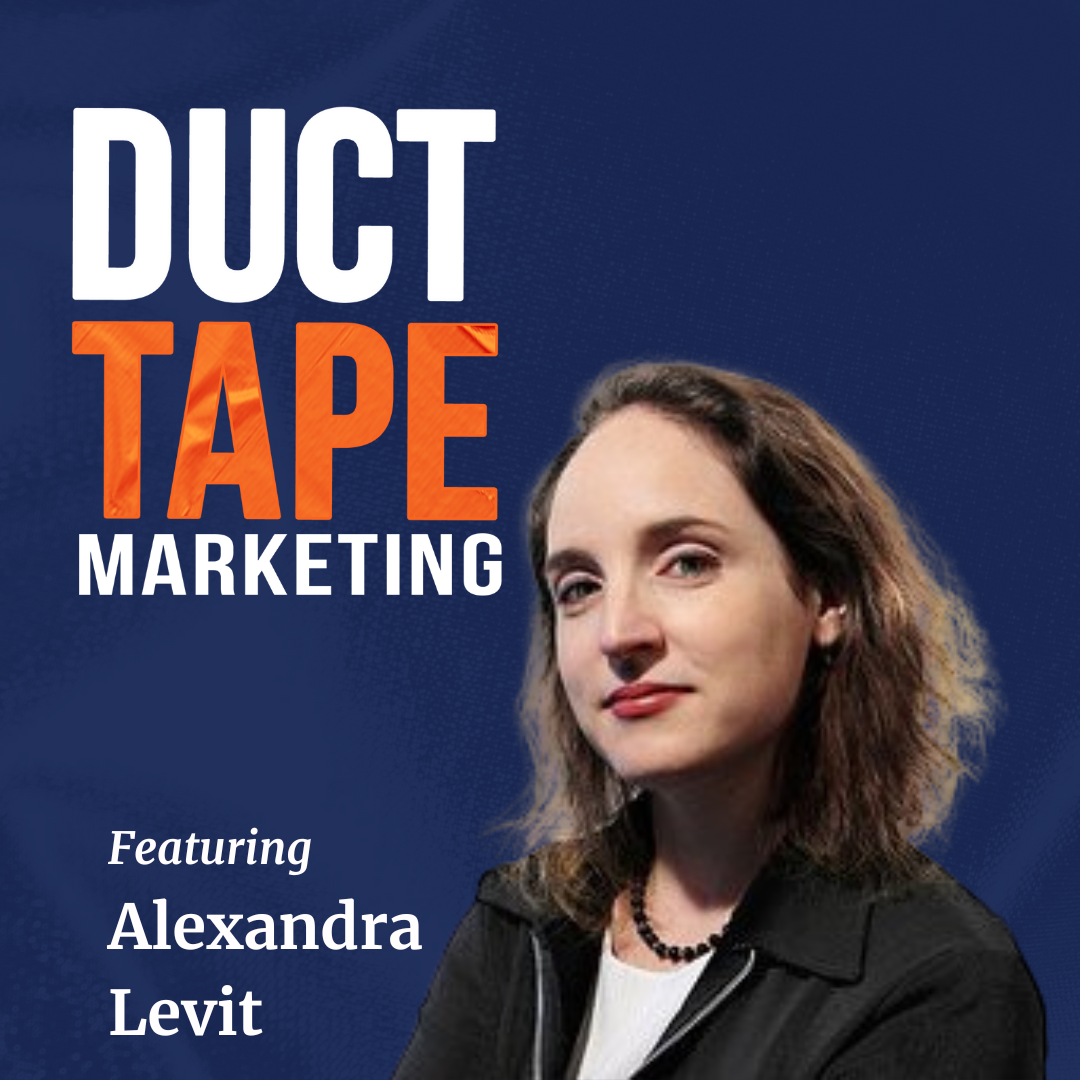
In this episode of the Duct Tape Marketing Podcast, John Jantsch interviews workplace futurist Alexandra Levit about her new book,
Make Schoolwork: Solving the American Youth Employment Crisis Through Work-Based Learning.
They explore how work-based learning, including apprenticeships, internships, and immersive real-world experiences, can bridge the growing gap between employers struggling to find skilled workers and young people facing underemployment after graduation.
As AI reshapes entry-level knowledge work and skilled trades face labor shortages, Alexandra makes the case that businesses of all sizes can build their own talent pipeline while strengthening their brand, culture, and community impact.
This episode is a practical guide for small and mid-sized business owners who are tired of chasing ready-made talent and want a smarter, more sustainable workforce strategy.
About Alexandra Levit
Alexandra Levit is a workplace futurist, author, and CEO of Inspiration at Work. She has written extensively about the future of work, talent intelligence, and workforce trends.
In Make Schoolwork, co-authored with GPS Education Partners, she outlines a scalable framework for work-based learning that connects students, employers, educators, and communities to address the American youth employment crisis.
Learn more at: makeschoolwork.org
What Is Work-Based Learning?
Work-based learning is education that takes place in a real-world work environment. It typically includes:
- Apprenticeships
- Internships
- One-to-one mentoring
- Immersive, skills-based workplace experiences
High-quality work-based learning is:
- Authentic to the student’s interests
- Immersive and hands-on
- Structured with clear learning objectives
- Designed to build both technical and interpersonal skills
Students gain practical abilities, such as operating equipment, integrating AI technologies, or mastering skilled trades, while also developing judgment, communication, and problem-solving capabilities.
The Youth Employment Crisis Explained
Alexandra describes a growing mismatch between open positions in the workforce, employers struggling to find qualified candidates, and young people who are unemployed or underemployed, even after earning four-year degrees.
Key contributing factors include:
- A cultural push toward universal four-year college enrollment
- Oversupply of graduates for traditional knowledge worker roles
- Declining entry-level hiring due to AI automation
- Persistent stigma around skilled trades
Meanwhile, industries like plumbing, carpentry, manufacturing, and technical trades offer strong starting pay, family-sustaining wages, career stability, and lower automation risk.
Work-based learning creates a direct pathway between students and real workforce demand.
Why This Matters in the Age of AI
AI is automating many entry-level knowledge jobs first. At the same time, roles that require complex physical movement, human-to-human interaction, skilled craftsmanship, and judgment and adaptability are far harder to replace.
Alexandra emphasizes that students who begin learning AI tools and robotics early can grow alongside the technology, developing practical integration skills that many experienced workers are still trying to catch up with.
Work-based learning does not compete with AI. It integrates AI into real workflows from day one.
The Employer Advantage: Building a Talent Pipeline
A Reliable Talent Pipeline
Instead of competing for scarce, ready-made talent, businesses can bring students in early, train them in company-specific processes, and develop loyalty and cultural fit.
Stronger Employer Branding
Participating businesses are seen as investing in their community, supporting local youth, and creating meaningful career pathways.
Improved Employee Engagement
Employees often thrive in mentorship roles. Acting as mentors increases engagement, develops leadership skills, and strengthens internal culture.
Long-Term Retention
Contrary to popular belief, young workers can be loyal when given clear growth opportunities, meaningful work, and competitive wages.
Many students who start at 16 or 17 through structured programs go on to build full careers with the same employer.
How Small Businesses Can Start
You do not need a complex corporate program to begin.
Step 1: Define the Outcome
Ask:
- What skills do we need long-term?
- What would success look like 2 to 3 years from now?
Step 2: Partner With a School or Program
Establish relationships with:
- Local high schools
- Community colleges
- Universities
- Work-based learning intermediaries (like GPS Education Partners)
Step 3: Avoid Random Acts of Work-Based Learning
Tours and one-off talks are helpful, but not enough. Create a structured plan with clear skill objectives, defined responsibilities, and a measurable timeline, such as a 10-week paid micro-internship.
Step 4: Leverage Existing Certifications
Use third-party certification programs to standardize skill acquisition, measure progress, and provide recognized credentials.
Addressing Concerns: Supervision, Liability, and Compliance
Common employer concerns include:
- Labor laws, especially for minors
- Transportation and scheduling
- Academic credit coordination
- Insurance and liability
Alexandra recommends working with experienced intermediaries, especially those familiar with local regulations, to avoid reinventing the wheel and ensure compliance.
Measuring Success
Key metrics for evaluating work-based learning initiatives include:
- Skill acquisition and certifications earned
- Retention rates post-program
- Conversion to full-time employment
- Employee engagement among mentors
- Workforce readiness improvements
Skill development is the most powerful and measurable indicator of success.
Key Takeaways
- The youth employment crisis is a mismatch problem, not a talent shortage.
- Four-year degrees are not the only path to meaningful, high-paying work.
- AI is reshaping entry-level jobs, increasing the need for adaptable, skills-based workers.
- Work-based learning builds loyalty, culture, and long-term workforce stability.
- Small businesses can start small, but must define outcomes clearly.
- Mentorship benefits existing employees as much as students.
Watch The Episode on Youtube:
Great Moments From the Episode
- 00:54 What work-based learning really means
- 02:25 The root cause of the youth employment crisis
- 04:19 The stigma around skilled trades
- 06:31 The human advantage over automation
- 08:45 Real-world success stories from GPS Education Partners
- 11:41 Why work-based learning builds loyalty
- 15:12 The underrated power of mentorship
- 19:55 Measuring skill acquisition as a success metric
- 22:21 Why AI integration must start early
Pulled Quotes
We don’t want random acts of work-based learning.
If you’re small and don’t have brand name recognition, this is how you build your own talent pipeline.
It’s as important to know what you don’t want to do as what you do.
Resources
- Make School Work:
makeschoolwork.org - Alexandra Levit, Inspiration at Work
John Jantsch (00:01.566)
If you're tired of hiring ready-made talent that doesn't actually exist, today's episode will show you how to build your own pipeline through something called work-based learning that strengthens your business and your brand at the same time. Hello and welcome to another episode of the Duct Tape Marketing Podcast. This is John Jantsch and my guest today is Alexandra Levitt. She is a workplace futurist, author and CEO of Inspiration at Work. She's written extensively about
how work is changing. And today we're going to talk about her new book, Make Schoolwork Solving the American Youth Employment Crisis Through Work-Based Learning. So, Alexandra, welcome back to the show.
Alexandra Levit (00:42.862)
Thanks so much for having me, John. It's good to see and hear you.
John Jantsch (00:45.634)
Likewise, likewise. So let's break down a couple of things in the title. What is work-based learning?
Alexandra Levit (00:54.702)
Work-based learning is the most simple explanation for it is that it is work, is learning that takes place in a real world work environment. And that typically includes things like apprenticeships, internships, one-to-one mentoring. And we refer to high quality work-based learning as being a fully immersive experience that's authentic to the individual in terms of the things that they are passionate about.
John Jantsch (01:04.0)
Yeah, yeah.
Alexandra Levit (01:23.902)
and that provides a tangible opportunity to spend a good degree of time learning skills that will make you career ready. So these can be anything from learning judgment and interpersonal relations to problem solving. But also it, lot of times gives students a very concrete group of skills about how to work a set of equipment. For example, it depends on where you're doing work-based learning. But if it's in a manufacturing setting, for example, you could very well be
John Jantsch (01:47.479)
Yes.
Alexandra Levit (01:53.044)
literally on the front lines of learning how to integrate AI-based technologies into existing robotics or existing equipment. And that's a very valuable skill set in today's workforce.
John Jantsch (02:04.61)
I would suggest far more valuable than, I don't know, AP calculus.
Alexandra Levit (02:09.87)
For sure.
John Jantsch (02:12.308)
I suppose it depends. All right. So, so the other part of the title I wanted to break out, how would you describe, I mean, you use the word youth employment crisis. How would you describe what you're trying to convey there?
Alexandra Levit (02:25.518)
Well, I think the important thing to recognize from my perspective, at least when I look at my own trajectory, is that there has been this mismatch or this gap for quite some time between the positions that are available in the workforce and the length of time that it takes employers to find the right talent and the number of young people who are unemployed or underemployed. And you would think if there's just a way to match
John Jantsch (02:55.17)
Mm-hmm.
Alexandra Levit (02:55.186)
the students who are looking for work with the organizations that are needing to fill positions that that would be a good way to go. Unfortunately, the way our current educational system is structured, it doesn't exactly operate that way in that over the last couple of decades, we really pushed, especially here in the US, toward every student should go to a four year college.
John Jantsch (03:20.13)
Yeah.
Alexandra Levit (03:20.652)
the be all end all, it doesn't matter what you're really interested in, whether you have the aptitude for post-secondary education, whether you have the desire, that's the outcome that both students and their parents expect that they're going to do. And so as a result, we have more people graduating college than we ever have had before, which is good that we are providing opportunities for education and especially education that was unaffordable to some prior to the last couple of decades.
because we have so many college students graduating, the jobs that are available on the knowledge worker front are not as prolific. And this is especially relevant in the last year or so where entry-level hiring has taken a massive dip due to the integration of AI-based technologies into the workforce. Some of those jobs have been the first to be automated. So what we really still see is there's a tremendous skills gap in jobs that
John Jantsch (03:58.273)
Mm-hmm.
John Jantsch (04:10.849)
Yeah.
Alexandra Levit (04:19.34)
don't necessarily require a four-year college degree, but there's a glut of students on the other side who've gotten all this education and don't know what to do with it. So work-based learning is what we feel is the solution to that employment crisis that's happening.
John Jantsch (04:33.962)
Well, and you take it from the headlines. mean, Amazon lays off, I don't know what the number was, 20,000 people or something like that. We have, in my agency, we have a lot of home service businesses that we do work for and finding skilled labor right now for jobs like plumbing and carpentry and things. There's a real need for that and consequently, they're paying a lot for those positions now. And so I see, do you see a real shift where
Alexandra Levit (04:58.467)
Yes.
John Jantsch (05:03.391)
AI is probably a ways away from being able to do plumbing and carpentry.
Alexandra Levit (05:08.162)
That's exactly how I see it. And I see that these, there is this strange stigma that I don't really know where it came from, but ever since I've been in this line of work, it's that, you want to have a career that requires a four year college degree. You don't want to go into manufacturing or plumbing or carpentry because that's not a desirable career path. Well, if you look at what is a desirable career path, it's something that allows you to earn a family sustaining wage.
John Jantsch (05:09.622)
Yeah.
Alexandra Levit (05:36.567)
and something that you enjoy doing. So to me, that's a pretty broad definition and it depends on who you are, what you might find rewarding and meaningful. And as you mentioned, these jobs pay astronomically well, way better out of the gate than a lot of knowledge worker jobs or what we used to call knowledge worker jobs. And so I think that that's, but there's this strange stigma. I do see a little bit of a shift though. And I think part of that is
everyone is starting to wake up to the impact of AI and realize we need to go back to what humans can do in our unique way. And that's things, I remember there was one study that showed that the robotics couldn't do simple things like clean a house because there were too many complex motions that they would have to program and it was just physically incapable of doing it. And there's a lot of things like that. And a lot of times too, these,
John Jantsch (06:20.458)
Mm-hmm.
Alexandra Levit (06:31.95)
trade occupations, they are really human to human and they're very interpersonal in nature. And so sometimes you don't, maybe you don't want an AI plumber coming to your house. Maybe you have your same plumber that you've worked with for 10, 15 years and now you're getting to know his or her son or daughter because they're taking over the family business. I mean, this is how we worked for most of human history. And I think we're starting to see that there was some value in that.
John Jantsch (06:57.92)
Yeah, just look at their Google reviews of these kinds of businesses. They hardly ever mentioned the company. It's Rusty, you know, who fixed my boiler. Right. So I think you're absolutely right. You had, I don't want to spend too much time on this, but you co-authored this with GPS Education Partners. Was there a research component that they participated in?
Alexandra Levit (07:04.77)
Yeah. Yeah.
Alexandra Levit (07:20.622)
It's a great question. And the answer is that I was looking for the solution to this problem for many, many years. The fact that we again have so many open positions and so many young people that aren't filling them. And I didn't really know what the solution was. I did a book a couple of years ago on talent intelligence, hoping that AI could help us with seeing the potential and adjacent skills of people. And that is one solution. But when GPS education partners came to me and they talked about their solution,
which is to convene a group of parties, it depends on what your unique situation is, but it could be a school district with a set of employers, with policymakers, with nonprofits who have an interest in the community. You get everyone together and you say, is the problem we're trying to solve here? Are we trying to get our local students into our local employers? And a lot of times that is the objective. But how can we all work together to come up with a common...
not only a goal, but also a plan of attack for mapping that directly, your local students to the jobs that are available in your community. And they have successfully done this over 25 years in many places in the US, but in particular in the Midwest here in Wisconsin, Illinois, Minnesota, and they have had astronomical success. And one of the things that I love about their story is that you hear these
John Jantsch (08:31.266)
Hmm.
Alexandra Levit (08:45.838)
crazy things like a kid would go into an employer at 16 years old, start working. And then the kid, I was able to talk to 10 years later, you know, he's 28 years old or 20, 26 years old. And he's now like a master welder at this organization. He built an entire career off one work-based learning experience. And so that's when I was like, we got to get the word out. We've got to figure out how to scale this because this is to me kind of a no brainer solution to a very, very significant problem that we are having.
John Jantsch (08:51.01)
Thanks.
John Jantsch (09:15.276)
So in the school, know, a lot of schools have had like intern programs that are part of a department and I'm thinking of colleges, but I'm sure high schools do this too. you know, the department has like some employers that they work with and there's internships and things. I mean, is this more on the school to actually make a curriculum that they can, you know, so like I can get three hours of credit or something for going and doing this work-based learning and the employer gets
You know, something that they've designed. mean, is that, is that the start of how it works?
Alexandra Levit (09:49.217)
Yes, and the curriculum is a lot of times co-created between the school and the employer with GPS Education Group, GPS Education Partners acting as an intermediary that understands the different objectives of the different parties. And in an ideal world, these practical experiences where a kid goes into a learning center and is doing a couple hours of schoolwork that pertains
John Jantsch (09:57.452)
Mm-hmm.
Alexandra Levit (10:18.328)
pretty closely to the work-based learning experience and then is going out on a shop floor, for example, and doing the very practical. So they might be getting certified in certain manufacturing areas. So while they're getting the very, I don't know, I guess you would say, hardcore on the ground experience, they're also getting some of that background educational knowledge that is essential to continue to pursue that career.
John Jantsch (10:29.878)
Mm-hmm.
Alexandra Levit (10:46.924)
And that's what I love about it is that it's education for a purpose. It's not just, well, we're going to go do this for your degree. We don't know if we're actually going to use it for anything, but we're going to do it. And this way, I feel like with work-based learning, you have a really educated determination about whether further education makes sense for something that you have learned you either want to do or don't want to do. We love to say with work-based learning that that's as important to know what you don't want to do as what you do.
John Jantsch (11:06.144)
Mm-hmm.
John Jantsch (11:17.058)
So I 100 % get the value for the students and for the schools really frankly. Let's talk about the employer for a minute. Is the employer, is the real goal of the employer is to actually entice this person to come and see how awesome we are and they're gonna eventually wanna work for us or is it to get cheap labor or what, how should an employer look at the value for them?
Alexandra Levit (11:21.23)
Mm-hmm. Yeah. Yep.
Alexandra Levit (11:41.741)
I think employers can look at it simply as a pipeline of talent. And the way that I've heard a lot of employers discuss this, it almost is like a CSR initiative, corporate social responsibility, where they want to be perceived as adding value to the community in general so that the community can prosper, employer can prosper, and the whole system works. And that is one objective. But I would also suggest that it's much simpler than that even, which is that where
John Jantsch (12:06.754)
Thank
Alexandra Levit (12:11.234)
Particularly, I know you have a lot of small businesses as your listeners. It's like if you're small business without brand name recognition, it's really hard to get talent. It's hard to get talent anyway, but it's especially hard if you don't have that name recognition and having a way to reliably get students in the door, train them on what they need to do, teach them how to be good workers. And then I think if you do a good job with this,
they do stay with you. I mean, we see that over and over again, and people say young people aren't loyal. I don't think that's true. I think it depends on the environment. And if they are provided an environment where they feel like they've gotten an amazing experience and they want to continue and they know they can earn a family sustaining wage if they keep going, and it makes sense, I think they are likely to stay with that employer. So to me, yes, it's a socially responsible thing to do.
But also, I think it literally gets people in the door. even if though not every single kid who goes into work-based learning is going to become a full-time employee. ideally, you have a few every year. And I think that that would be a really important benefit for organizations that are having trouble getting people.
John Jantsch (13:23.468)
So how would I, if I'm a business and I don't know, I'm a 20 person firm, I'm not, you know, I'm not a lawyer. mean, social responsibility is nice, but it's also, it's also down, probably somewhat down the list of all the other stuff I have to manage, right? So how do I start small? How do I look at, you know, obviously I need to, I probably need to find a school maybe that's got this program already, right? But how do, so how do I start small?
Alexandra Levit (13:29.166)
Okay.
Alexandra Levit (13:36.908)
Yep.
Alexandra Levit (13:49.239)
I recommend it because I actually did this myself. So I have an even smaller business than you. But what I did is I got some Northwestern students because I'm in Chicago and I had my own little work-based learning program for these Northwestern students. Some of them are still working with me today in different capacities. And so I think that's really it. It's establishing a relationship with a school that has the type of student that you think would be effective working in your organization. And then
You got to come up with a plan with the school to understand like, they going to be getting credit? What kind of credit are they going to be getting? are the other components of this besides they're coming to your location to work? When they are coming to your location to work, what does that look like? What is the experience going to entail? Because one of my favorite things I heard Stephanie Locke, one of my co-authors say is,
We don't want to encourage random acts of work-based learning where, you know, we do like a tour of our facility for a bunch of students or somebody comes and talks. It's like those things are nice. They're important for exploration, but ideally there would be a really concrete plan about what that student is going to learn, what they're going to do, and how the different parties are going to benefit, as you said, because employers are putting themselves out there trying to do something that they haven't done before. And therefore,
John Jantsch (14:45.238)
Yeah, yeah, yeah. Right. Yeah.
Alexandra Levit (15:12.224)
It does require some degree of effort and some degree of willingness to change and do things a little bit differently. And the other thing that I'd point out that is a real benefit, I think for any size business is that employees love to be in the mentorship position. It really goes a long way toward their own engagement when they are able to take a student under their wing and teach them things.
John Jantsch (15:30.368)
Mm-hmm.
Yeah, that's true.
Alexandra Levit (15:39.148)
And I think that's kind of an underrated benefit. We people think, or leaders think, employees don't have time for this. They don't want to bother. And it's actually the opposite, I found. When it's done correctly, this is really rewarding for employees and allows them growth opportunities as well.
John Jantsch (15:53.858)
And I suspect, and again, I'm just thinking myself, you know, I suspect the way to do this is to actually, I mean, it's like a lot of things start with what's the outcome you want, then back it into like, okay, we're to make this a 10 week paid micro internship or something. I mean, just really define it. Even have like down to the level of having checklists of what we want that person, you know, to accomplish and what we hope the outcome can be from that. Because I think if
Alexandra Levit (16:04.27)
Yep.
John Jantsch (16:20.63)
I think a lot of mistakes, a lot of times, and this goes with hiring in general, a lot of times people, I need a VA or I need an executive assistant or I need, you know, whatever. And then they really don't define the position and they don't define the outcome. so then it just becomes babysitting.
Alexandra Levit (16:37.59)
Yes, absolutely. And actually, that's the value that GPS Education Partners brought to me and my desire to solve this problem. They've got a really well thought out six part process that takes you literally through what you do first, second, third, fourth, and fifth. And it allows you to be creative in the sense if you want to do a smaller program or you want to pilot something, like you can still use that framework. It's just a matter of how
John Jantsch (16:42.956)
Yes.
John Jantsch (16:49.654)
Right.
Alexandra Levit (17:04.472)
complex it needs to be at the beginning. And the answer is it probably doesn't need to be super complex at the beginning. And it does, but it does give that blueprint. And of course, if you need help and make schoolwork has a lot of detail in it about how to do these different steps, but you can always call them or a group like them for help in setting something like this up. I don't, it's not super expensive to do. It's just a matter of feeling passionately about it, that this is a viable solution for your business.
John Jantsch (17:34.516)
And, and, and I, I'm again, I'm thinking like business owners, time supervision liability. mean, are there things, concerns, you know, beyond just like getting the work done, but other, concerns of bringing a work-based learning might be a teenager, you know, that, you're bringing into an environment that you've not had teenagers in. you know, are there other considerations like, you know, supervision and liability?
Alexandra Levit (18:00.694)
Yeah, I mean, there are. And that's one of the reasons if I was doing it myself, I would definitely be consulting with a group that's done this before, because there's all sorts of things. And there's even the fact that if they're getting a high school degree while trying to do this, well, how are they going to be transported? How is credit going to work? There are just a lot of things like that, where once you dig into the weeds, you're like, well, actually, there's a lot of factors and things to consider.
John Jantsch (18:08.054)
Yeah.
John Jantsch (18:19.734)
Right.
Alexandra Levit (18:30.21)
That's not to say that these are deal breakers, but they are things where I personally, if I was gonna do this, would be consulting someone who's done it before, especially in my geography, because we do find that those labor laws differ by state. So you want somebody who's done this kind of thing in your state and who understands like these are the boxes we have to check for different, we wanna be in compliance of all of the things we need to get, just like with any employee, you wanna be in compliance.
John Jantsch (18:33.442)
Mm-hmm.
John Jantsch (18:44.042)
Mm-hmm.
John Jantsch (18:54.743)
Yeah.
John Jantsch (18:58.146)
Yeah. So, so another, whether it's GPS or somebody else, mean, another kind of, um, check mark for, um, going with somebody that's figured all that part of it out. Right. So, so you're not at a surface.
Alexandra Levit (19:10.478)
Yes, yes, exactly. It's going to be, I think the part that you mentioned, which is answering the why and what do we want the outcome to be. I mean, that part is the thing the employer has to think really, really carefully on and no one can do that except for the employer themselves and their leadership. But some of this other stuff, I think, why not? Why try to reinvent the wheel? Why not work with someone who's already done it a bunch?
John Jantsch (19:34.594)
So, and a lot of business owners think this way as well. How do I measure the success of this if I'm going to do this? What are some kind of common metrics you mentioned? Obviously the social impact is one that I think people want. It's a little harder to measure, but what are some of the things that people might measure?
Alexandra Levit (19:55.746)
My there's a whole bunch of things that people can measure and we do talk a lot about this in the book, but I would say my favorite measurement is skill acquisition and it's understanding. All right, you come in and work for me. What what literal skills are you going to come out with and how do we measure whether you've acquired them or not? So having certification programs that are tied to this, for example, there's a lot of certification programs that already exist in different industries that were established by.
John Jantsch (20:21.59)
Mm.
Alexandra Levit (20:23.119)
third party organizations or nonprofits that you can piggyback on. And you make that a priority for them to acquire certain skills. And by the way, we are in the middle right now of this massive workforce wide upskilling in the area of AI. AI is being integrated into literally everything. So having that as part of your work-based learning initiative, well, not only are you going to be helping students, but again, you're gonna be helping all the employees.
John Jantsch (20:40.055)
Mm-hmm.
Alexandra Levit (20:52.367)
who need to learn this stuff as well. And what I love is that if you have a 16, 17 year old student on the front lines of learning these technologies, they can grow up with the technology. And as the technology evolves and changes, the student is keeping up with it. And that's something that we, those of us who've been in the workforce a while, we're just trying to play catch up here. And we've done things a different way for a very long time. And I love the idea of starting students
John Jantsch (20:52.544)
Mm-hmm. Yeah.
John Jantsch (21:06.7)
Yeah.
Alexandra Levit (21:21.355)
in robotics, like what can the robots do right now? What can they do next year? How is this going to evolve? And what are the very practical things we need to do to make sure that we are deploying AI ethically, responsibly, and efficiently? Well, this is stuff we all need to learn.
John Jantsch (21:37.844)
Well, and you know, one of the things I think is interesting and, know, when social media came along, all of our clients would like, just go get a teenager. Like they use all this stuff all the time. They know what to do. They didn't know how to apply it. They didn't know actually that they didn't know actually the practical use of it in, the environment, that, that they were being put in. And I think that that's a, an element that, you, a business owner or a business person can certainly bring to.
Alexandra Levit (21:50.979)
Yeah, that's not true.
John Jantsch (22:07.638)
Yeah, okay, they understand all these and they have no fear of playing with all these tools, but how they actually put them in context of a good use in a business situation, I think is something that is an invaluable skill they're never gonna learn in school.
Alexandra Levit (22:21.657)
you're exactly right. And that gets to the heart of what the problem is workforce wide, which is that nobody knows how to integrate these things into their existing business processes and workflows. And so we're finding that AI is a lot of hype right now without a lot of ROI precisely for that reason. So if we can teach students that at a very young age and get them used to, okay, every time a new technology comes down the pike.
I had to figure out what's the best use of that. How do we deploy that in a sensible way? That's going to be incredible because these things are only going to keep evolving. We are not going to stop and it's only going to get faster.
John Jantsch (22:57.462)
No. Yeah, absolutely. Well, Alexander, I appreciate you taking a few moments to stop by. Where would you invite people to connect with you and find out more about Make School Work? And I think you also have a makeschoolwork.org organization.
Alexandra Levit (23:12.823)
Yes, our website, MakeSchoolWork.org has obviously the book, but it's going to continue to have resources for how you can assess your own readiness to start work-based learning, just some additional things to think about. This is not an easy thing to do, but it's also, when it goes well, it's extremely rewarding. And I think we're going to see more and more of this as we just come to terms with the fact that...
John Jantsch (23:32.076)
and
Alexandra Levit (23:38.179)
The current education system here in the US is not really doing its job to prepare all students for the world of work. We've got kind of a narrow approach that I think deserves to be widened and further considered.
John Jantsch (23:49.568)
Yeah, awesome. Well, again, thanks for stopping by the show and hopefully we'll run into you one of these days out there on the road.
Alexandra Levit (23:56.374)
You're welcome. Thanks for having me, John. It's good to see you again.
John Jantsch (23:59.222)
Likewise.
Sign up to receive email updates
Enter your name and email address below and I'll send you periodic updates about the podcast.