

Catch The Full Episode
Overview
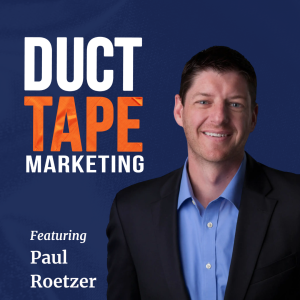 What happens to a business when the tactical, repetitive work that once trained junior employees gets absorbed by AI? That question sits at the center of this conversation with Paul Roetzer, founder and CEO of SmarterX and the Marketing AI Institute. John Jantsch and Roetzer trace the arc of AI adoption from the early days of IBM Watson through the launch of ChatGPT, and into what Roetzer now sees as the first innings of a much longer transformation.
The conversation moves through several themes that matter to any business owner trying to make sense of AI right now: why AI has become the underlying operating system of business rather than just another tool, why the traditional path from junior to senior employee is at risk of disappearing, and why literacy, as opposed to technology, is the real foundation of organizational transformation. Roetzer also introduces his theory of an AI-era apprenticeship model, a way for companies to reinvest efficiency gains into developing new talent rather than simply cutting costs.
This episode is for marketing leaders, agency owners, and small business owners who want a clear-eyed view of where AI adoption is headed, along with practical thinking on how to build teams that can keep up.
Guest Bio
Paul Roetzer is the founder and CEO of SmarterX and the Marketing AI Institute, and co-author of Marketing Artificial Intelligence. He launched MAICON, the Marketing AI Conference, and co-hosts The Artificial Intelligence Show. Roetzer has delivered more than 200 keynotes on AI for organizations including Google, LinkedIn, and the US government.
Key Takeaways
- AI has become the underlying operating system for business, not just a marketing tool, which means AI literacy now matters at every level of an organization, starting with the C-suite.
- The traditional junior-to-senior career path is breaking down because AI is absorbing the tactical, repetitive work that used to train entry-level employees.
- Roetzer’s apprenticeship theory proposes reinvesting a portion of AI-driven revenue-per-employee gains into developing junior talent, rather than sending all of the savings straight to the bottom line.
- Companies under near-term growth or margin pressure face the strongest incentive to reduce staff, while companies willing to play the long game are better positioned to invest in people.
- Of Roetzer’s eight pillars of AI transformation (vision, strategy, data, technology, governance, literacy, people, performance), literacy is the true starting point, and full transformation requires vision and ownership from the CEO, not just tools handed down to teams.
- Pushback against AI is a natural and growing response to real disruption, and business leaders need to hold space for both the opportunity and the genuine costs.
Great Moments (Timestamps)
- [00:01] – Introduction: what happens when AI absorbs the work that used to train junior employees
- [01:52] – Roetzer’s origin story, from a 2012 concept called a marketing intelligence engine to the founding of the Marketing AI Institute
- [06:23] – AI as the underlying operating system of business and society
- [12:19] – The eight pillars of AI business transformation and why no company has passed the test yet
- [15:34] – Why AI literacy is the real foundation beneath every other pillar
- [18:05] – The Architect, the Orchestrator, and the Apprentice: Roetzer’s theory for rebuilding entry-level work
Memorable Quotes
- “I overestimated how quickly everyone else was going to figure this out and the impact it would have in the near term, but then I underestimated the long-term, true transformation it was going to cause to the economy and businesses.” — Paul Roetzer
- “If we remove all of that repetitive, data-driven work from the first three to five years of our careers, how do we get to become the experts we all became and have that domain expertise and institutional knowledge?” — Paul Roetzer
- “You have to play the long game for sure, and a lot of companies aren’t going to have that benefit.” — Paul Roetzer
- “We have become an AI driven economy for better or for worse. I think we’ve gotten to the point where it’s a general purpose technology… this is on par with the invention of computers and electricity.” — Paul Roetzer
Resources
- SmarterX and the Marketing AI Institute
- Marketing Artificial Intelligence (book, co-authored by Paul Roetzer)
- MAICON, the Marketing AI Conference, October 13 to 15 in Cleveland, promo code DUCTTAPE150 for $150 off
- The Artificial Intelligence Show (podcast co-hosted by Paul Roetzer)
John Jantsch (00:01.891)
So, what happens to a business when the entry-level work that trained your people gets absorbed by AI? Today's guest has been thinking about that maybe harder and longer than most. And his answer is possibly uncomfortable. The traditional path from junior to senior breaks, and most organizations have no plan for what replaces it. Hello, and welcome to another episode of the Duct Tape Marketing Podcast.
This is John Jantsch. My guest today is Paul Roetzer. He is a former, or I'm sorry, he's the founder, not former, and CEO of SmarterX and Marketing AI Institute, and co-author of Marketing Artificial Intelligence. He launched the Marketing AI conference, MACON, co-hosts the Artificial Intelligence Show, and has delivered more than 200 keynotes for AI for organizations including Google, LinkedIn, and the US government. I think after Chat GPT launched,
Even though Paul was on that the trail, that certainly opened up many, many doors for him. So Paul, welcome back to the show.
Paul Roetzer (01:03.192)
China, it's always good to be with you and to catch up. It's it doesn't happen often enough.
John Jantsch (01:05.783)
Yeah. You you I think your first appearance was when PR twenty twenty, maybe bookwise was that was the name of the book, right?
Paul Roetzer (01:16.492)
the kind of the agency was PR twenty twenty. That was the agency I sold back in two thousand twenty one. And then we had, I don't know, the a marketing agency blueprint and the marketing performance blueprint. It could have been one of those that we were on for.
John Jantsch (01:27.171)
Awesome. All right. Well, let's dive into the AI Institute. you built it really to help marketers understand AI. and then it just kind of blew up, right? I mean, it was an idea that then, you know. So so what it made clear that you needed to build that, which at the time was kind of outside of the marketing realm.
Paul Roetzer (01:38.018)
Yeah. Seven and a half years later.
Paul Roetzer (01:52.406)
Yeah. So the I I I'll give the quick origin story. So actually it goes back to the PR twenty twenty days. In two thousand and eleven, I wrote the marketing agency blueprints. That was my first book. And at the time we were a few years into being HubSpot's first partner and kind of at the forefront of marketing technology and social media and inbound marketing and content marketing and all of those things. and that was the year IBM Watson won on Jeopardy. And I became obsessed with understanding how that technology worked. And then
John Jantsch (02:16.226)
Mm.
Paul Roetzer (02:21.997)
Could it actually be applied? That same idea of it was basically a prediction engine. Take data in, you understand the language behind it, and then you make predictions about what comes next. And so I started working on this concept of what I was calling a marketing intelligence engine. And this is back in 2012 and 13. And the premise was: if we could use Watson-like technology to predict what to do next, what net next best action, next strategy, how to spend our marketing dollars, then we could build.
An entirely new way of doing marketing. And so that was the original hypothesis. And I shared that idea in my 2014 book. And then that was like out of the 50,000 word manuscript, it was like a thousand words. And the book was not about AI otherwise. And that was all anybody wanted me to talk about. And so fast forward to 2016, and we were like, Well, what do we do with this? Like I'm really intrigued by it. I'm convinced it's gonna change marketing and business in the world, but like I don't really know what's possible.
So we created the Marketing Institute to research it ourselves and then tell the story of AI, like what was real, what was happening. And so yeah, we created the Marketing Institute in 2016. And and then, like I always half joke, like we survived long enough financially for ChatGPT to show up. I sold my agency in 2021, focused exclusively then on AI and the institute and eventually SmarterX. raised a seed round of funding that kind of got me through the the really lean years and
Chat GPT came and all of a sudden the interest in AI exploded.
John Jantsch (03:53.699)
So I've been through I've been doing this a long time. I've been through several of these game changing technologies that came along. And there seems to be this curve. You know, there's the early adopters, of course, and you know, and then there's the overhypers, you know, and then there's the like, my god, I guess it's not going away. We better figure it out. And and then there's just kind of like, now it's plumbing. we don't even call it anything anymore.
Do you see AI having a similar path even if it's f faster and and more disruptive?
Paul Roetzer (04:27.637)
I did. so my belief was actually by 2020 we wouldn't have to call it AI anymore. I just thought it was gonna be like marketing and software and stuff. So I what I've always said was I overestimated how quickly everyone else was gonna figure this out and the impact it would have, like in the near term, but then I underestimated the long-term, like true transformation it was gonna cause to the economy and businesses and things like that.
John Jantsch (04:32.842)
Okay. Yeah, yeah.
John Jantsch (04:44.236)
Yeah.
Paul Roetzer (04:53.047)
So I have always sort of had this feeling that, like, well, maybe we shouldn't even call it an AI institute or AI technology or whatever. We shouldn't differentiate in that way. But I've now become convinced that we have a we have a very extended runway ahead of us where being AI matters, like being AI forward matters. Like it's a differentiator within organizations to say that you're AI forward, that you understand the technology, you use the technology.
John Jantsch (04:59.517)
Mm-hmm.
John Jantsch (05:12.406)
Mm-hmm.
Paul Roetzer (05:18.319)
and then as a business, I think it's becoming fundamental for leaders of businesses to be able to think of themselves as an AI forward organization that they're looking at ways to infuse it into people, processes, technology. And so I don't know, it's like I I thought we would be past it by now. And I I honestly I feel like we're just in the first innings still.
John Jantsch (05:37.154)
Yeah. Yeah. Think about how many defunct social media marketing agencies, you know, are out there, for example, right? and and I think your your idea that, we don't wanna it's great that that's the thing now, but we don't want to go down that to where it just becomes, you know, business consulting or something. But you know, I think one of the major differences is AI's impacting
Paul Roetzer (05:44.449)
Yes.
John Jantsch (06:02.301)
every area of a business. I mean, you know, the finance people are using it, the operations people are using it. I mean, obviously the marketing people are using it. And think that's probably a significant I mean, there are many others, but but would you say that that's maybe in some ways why it's you've got this long runway is because, you know, it's basically gonna impact everything.
Paul Roetzer (06:23.499)
Yeah, I I've I said years ago that I believed that AI was going to become the underlying operating system to businesses and society, that it was it was literally going to be woven into every aspect of what organizations do, their people, their processes, their their technology. And then within society, it was gonna become the epicenter of the economy. It was gonna basically be the driver of growth. And that's all starting to happen. And so I do think that.
John Jantsch (06:31.543)
Yes.
John Jantsch (06:46.871)
I was gonna say they're definitely there are definitely people suggesting that that's where we are, yeah.
Paul Roetzer (06:52.041)
Yes, it's like you the like if if we stopped building data centers right now and if the five technology companies that are spending north of eighty to a hundred billion a year on AI infrastructure stopped doing it, the economy would crumble. Like if we whether people realize it or not, we have become an AI driven economy for better or for worse. And so I yeah, I think we've gotten to the point where it's a general purpose technology. Social media is a tool. Like
John Jantsch (07:07.576)
Yeah.
Paul Roetzer (07:19.297)
This is this is on on par with like the invention of computers and electricity and like it it yeah, so that's what that's what's different.
John Jantsch (07:19.649)
Yeah.
John Jantsch (07:24.611)
Cars. Yeah, yeah, yeah. So there's a little bit of a rising bubble of people that are anti AI. you know, you you see the marketing positioning of, you know, no AI was used in the creation of this. Do you think that is simply a trend or do you think that that will
Paul Roetzer (07:46.51)
I think it's going to grow significantly. I think it's gonna be stoked by interest groups that want it to grow. And then I think it'll naturally grow because people's lives and communities are gonna be impacted in negative ways. So I always like the the closest thing I can equate to to try and make it tangible for people is, you know, if we go back to 1994, 1995, the internet's like becoming a a real thing in society. And at that moment, we said, you know what?
There's gonna be this thing called the dark web, where these like horrible people do horrible things and it's gonna cause like online bullying and like you're gonna have all these downstream super negative things that happen. But we go back and say, but would we still build the internet? Yeah, like a hundred times out of a hundred, you would probably still build the internet because it has changed society in a bunch of profoundly like positive ways. And I think AI is gonna be the exact same thing. There's going to be absolutely
Negative things that happen as a result of it, whether it's building of data centers in communities that don't want them, job loss and displacement, whatever. Like those things are gonna happen. They're a byproduct of it. But if all goes well, it's also gonna transform health and create growth engines and opportunities we've never had before and solve mysteries in the universe. Like it's gonna do all these things too. So it's totally natural that there's just there's pushback because it's starting to affect people's lives. And we
you know, wherever your role in this is, you have to be empathetic to that. Like it's and that's my problem with a lot of like the Silicon Valley mentality is accelerate at all costs and like forget if if there's risks and fears, like throw those aside. I'm not in that boat. I feel like we have to embrace the fact that not everyone loves this and it isn't all just abundance and amazing things. There's actually a bunch of things we have to deal with as a society as a result of this.
John Jantsch (09:32.652)
Yeah.
John Jantsch (09:43.391)
And you know, another issue that I think is I mean, I think there were some unforeseen things that came out of other technologies. But I it feels like even if you ask the smartest people in the world who are making this stuff, they don't really know where it's gonna go. And I think that there's there's an element of that that I think people some regulation needs to be in order to like not get too far out in front of something they can't stop.
Paul Roetzer (10:09.227)
Yeah, there's growing like so recently Demis Asabas posted online about the need for regulation and experts ending a framework. He's the the co-founder CEO of Google DeepMind. Anthropic has made proposals around regulation frameworks. Sam Altman has called for regulation on Capitol Hill. Like they all claim to want it in different forms, but the regulation can be done where it actually has the negative effect on society. So there's this like.
Very fine line that I am not the expert in by any means about how to do regulation well. there are very few people that are building the technology who who don't think that there needs to be some protections and guardrails in place, that we don't have to stop and say this is gonna have a serious impact. We should be thinking more deeply about it. The challenge has been the leaders of these labs, they're so focused on just building the technology and competing with each other and competing with China and other countries. They're
John Jantsch (11:04.524)
Trying to make money. Yeah. Yeah. Yeah.
Paul Roetzer (11:05.525)
Yeah, they don't sit around and think about the writers who are going to lose their jobs. Like it's just not and they live in a bubble where it's like they're all just technologists and engineers and like they're all going to have jobs for the foreseeable future because they're all growing and hiring more of those people, but they don't think about the average knowledge worker and the impact it's going to have. So they're hiring economists and philosophers and like they're trying to now consider it, but for a long time, they were just heads down, accelerated at all costs.
John Jantsch (11:33.706)
Yeah. Well and I and I think unfortunately when it comes to regulation, you know, you think about the government bodies that are going to decide they need to regulate this. I mean, they can't even line a swimming pool. You know, so the idea that sorry, that was a cheap one, but the but the idea that they're gonna actually you know, regulate an industry like this, you know, is pr probably kind of frightening.
Paul Roetzer (11:55.586)
Well, yeah, and they don't understand the technology and where it's going. Like the idea originally a couple of years ago is to limit it based on how much compute was needed to train a model. Well, that's laughable amounts of compute these days. Like and then they just find ways around it. So every time they try and find a way to regulate it, it generally is a a very narrow minded way of thinking about it that would eventually be obsolete within like a year or two.
John Jantsch (12:19.158)
So let's talk about eight pillars of business AI transformation. That's something that you have written about. hopefully you remember writing about that. I'll I'll I'll name them for you vision, strategy, data, technology, governance, literacy, people, and performance. the key thing, whether you want to check any of those boxes, is you said no companies ever passed this test yet. where do companies break down in terms of any of those elements when it comes to transformation at an organization?
Paul Roetzer (12:49.419)
Yeah, so this a relatively new concept that I shared. It's part of a larger transformation system that I'm developing. And it's like the first piece to it because we talk to a lot of companies of all sizes, small, mid-sized businesses, large enterprises. And everybody's trying to figure out like what does it actually look like? We throw out this term transformation, but like no one really has quantified how do we actually do that. And what we've seen time and time again is, especially in larger enterprises, but it happens in small businesses too.
Just treat it as this technology problem. Like, we just gotta go get some Chad GPT licenses and give them to people. And like then we're gonna get all these amazing benefits of AI. What app, yeah, and they throw it into the technology pool to do. What needs to happen, and the fundamental flaw that we see is a lack of situational awareness and vision from leadership. And so, my like, if I boil this down to one simple thing, the CEO has to drive the transformation. Like
John Jantsch (13:21.226)
Yeah. And the CTO's in charge of it. Yeah. Right.
Paul Roetzer (13:43.316)
It has to be so important to the organization that the CEO has embedded him or herself in the deep understanding of the moment, of what the technology is capable of, of the impact it's going to have on their organizational structure, their people, their products, their markets. And if the C-suite doesn't have that, then you are not going to see a complete transformation within an organization. So vision and strategy from the leadership on down.
Is what's fundamental. What's driving most of the innovation and transformation in companies so far is actually bottom up, where people are just like bringing their own devices to work or getting their own personal accounts and just like doing their own thing. And then sometimes that turns into a collective of people doing their own thing. And then maybe a department's like, let's form around this and let's get a marketing AI council or something. But what often lacks is that top leadership that truly understands this needs to be one of like
John Jantsch (14:19.222)
Mm-hmm.
Yeah.
Paul Roetzer (14:41.089)
The three biggest priorities we are working on as an organization.
John Jantsch (14:44.428)
Well, and I think you hit on a really thing the thing I see all the time is that they're treating it like tools, like, here's a new laptop. you know, as opposed to the fact that this is probably you probably need to rethink your entire organization. You probably need to think what it is, rethink it what it is you actually do. and that might be a little bigger question, you know, about do you even have the right people? you know, do you have, you know, is the structure make any sense anymore? I mean, there's just
You know, a lot of people like you and I sit around and talk about this stuff, and I think a lot of fifteen person business businesses are saying, Yeah, okay, tell us. I mean, it's one thing to say you need to rethink your organization. Okay, but like what's the roadmap for that? I mean, how does somebody, you know, w when you talk about those pillars, are there two or three that they ought to be addressing before they ever like sign up for a subscription? Yeah.
Paul Roetzer (15:34.87)
Yeah, so I mean, literacy is the fundamental thing. So it it's number six on my list, but it does it's actually probably number one overall because the even the C suite needs AI literacy. They need the knowledge and the understanding and the belief system around AI and its impact before they can prioritize it strategically within a business. So developing understanding of AI capabilities, the comp comprehension of like what it is and what it's capable of, and then the competency to use the tools in an intelligent way.
John Jantsch (15:44.972)
Yeah.
Paul Roetzer (16:02.199)
That like you know when to go in and ask ChatGPT for help and and then you know what good looks like. So AI literacy is actually the foundation of all the other components. And then if you do that in individually and you go through the organization and say, okay, we're gonna raise the skill level of everyone, the understanding of AI and the ability to work with it, then you can you can move the organization forward more, not only efficiency with higher efficiency and productivity, but drive actual innovation and growth as a result of it. And then as a small business, you can start to think.
Wow, like for 20 people, we could be performing at the level of 50 people. I was actually having this conversation today with our director of operations, who she and I used to work at my agency together. And we were laughing. I said, Could you imagine if we had these tools back when we owned an agency? Like it like 90% of what we did for clients, AI is capable of doing now. And so, like, like the perfect example we gave was we used to like give.
John Jantsch (16:49.301)
Yeah.
Paul Roetzer (16:59.443)
Monthly performance reports to clients by the 15th of the following month. So you'd wrap the month up, you'd organize the data, you'd put it into the thing, you'd do the analysis, you would create the PowerPoint, you'd schedule the meeting, and by the middle of the month, you were talking about what happened the previous month. We now at SmarterX, our COO runs those things in real time. So like at any moment, she has it connected to the data.
John Jantsch (17:04.514)
Yeah. Right.
Paul Roetzer (17:27.585)
She can tell the narrative of what is happening across all of our KPIs. And boom, here's the update in Zoom. Stuff that we used to spend dozens of hours creating on a 15 day lag, we now do in real time. And so when you apply that across entire businesses, all different departments, you start to realize how different we can run companies today.
John Jantsch (17:49.535)
One thing that and and I said it in my beginning kind of question was that also trained a lot of people, right? A lot of the people that did that work learned a lot about marketing by doing that work, and they're now missing that. how do we fill that gap?
Paul Roetzer (17:57.495)
Yes.
Paul Roetzer (18:05.547)
I don't know. it is the focus of my Make Con 2026 keynote. So the name of the keynote is The Architect, the Orchestrator, and the Apprentice. And my basic hypothesis is that we have to redefine entry-level work because the tactical things that all of us did to become experts, to know what good looks like, to have judgment and taste, and to be able to work with these amazing tools in a responsible way.
We can do it because we did the data-driven repetitive work all those years and learned right from wrong and good from bad and things like that. And then we edited other people's work. And it's like if you remove all of that work from the first three to five years of our careers, how do we get to become the experts we all became and have that domain expertise and institutional knowledge? And so I don't know the answer, but my current theory is that it looks something like an apprenticeship.
That organizations will have an increased revenue per employee number in as a benefit of AI. So you use AI to run a more efficient business, thereby generating more revenue per employee. But rather than putting that straight to the bottom line, you reinvest a portion of that increased revenue and profit back into developing entry-level talent through an apprenticeship program where they don't have a direct impact on revenue. They're actually an expense item for the first maybe two to three years of their career. And so
John Jantsch (19:02.304)
Mm-hmm.
Paul Roetzer (19:31.81)
That's a theory, but then you actually have to operationalize well, okay, if if that actually is a viable idea, how do we do it? How do we train them? How do we use these tools to advance their learning so they still come out after two or three years with not only the level we had after two or three years, but maybe like 2x that. So we actually accelerate their learning, their taste, their judgment, their capabilities by leveraging AI technology to train them in new ways. And I have yet to meet a single leader.
Of any company of any size that has solved for
John Jantsch (20:05.558)
Yeah, that's really interesting too, because I mean I I see it every day. It's like right now some of the entry level people can't recognize when AI is just hallucinating and saying stupid stuff. and and or just off brand, you know, even. and I think a lot of that comes from, you know, the fact that you can sit around and look at something and and immediately, you know, know the course correct.
but that just comes from experience. And I think I think that's a really brilliant idea, the idea of of apprentice. but again, you also mentioned expense. and I think that's what's gonna make it hard for people. But the you know, companies that invest like that, you know, long term, we've seen it time and time again, win. so I think that yeah, yeah.
Paul Roetzer (20:52.833)
Yeah, you have to play the long game for sure. And a lot of companies aren't gonna have that benefit. Like I've always said, if you're publicly traded, venture capital backed or private equity owned, you're f you're fighting an uphill battle to follow that kind of model, to play the long game and not just take the near term benefits of cost reduction.
John Jantsch (21:10.134)
Are are we past the period when, you know, there was a lot of noise about like I'm I've gonna be able to reduce my staff to, you know, a third of what I have. Are we past people realizing that because they're actually working harder now than they ever were?
Paul Roetzer (21:24.853)
No, I I don't think we're any I don't even think we've scratched the surface of people realizing that they can reduce their staff. Like, so my my basic premise here is I I do think that AI is gonna drive a lot of innovation, a lot of new businesses, a lot of growth and jobs through entrepreneurship and and creation. But when I talk with leaders at enterprises who are under these very near-term
financial requirements to run the company where you have to either be growing or if you're not growing fast enough, you have to be cutting expenses to still maintain the profit margins that are required. In those businesses, it's really hard to sit there and say if you've had 15 marketers for the last 10 years, that you still need 15 marketers. Because we if if you train someone properly, like a a manager director level can do a lot of the entry-level work and where you maybe just don't.
need that entry level higher you were gonna make this year. And so in companies that aren't growing, I think it's very hard to make an argument that they will maintain or increase their staffing levels. I I think companies that are growing less than 10% will be under tremendous pressure in the very near future. Once their CEOs realize what's possible, I think they're gonna be a lot enough pressure to reduce their staff.
John Jantsch (22:41.131)
Mm-hmm.
John Jantsch (22:44.748)
Talk to me a little bit about MACON. I appreciate you stopping by the Duct Tape Marketing Podcast, but once you spend our last minute or so together talking about Makeon and inviting people I think you said you even had a special discount code for me.
Paul Roetzer (22:57.187)
yeah. So Mekon, this is our seventh year. It's hard to believe. I I was I posted something recently about how crazy it actually seems in retrospect. We started this conference in 2019, three years before ChatGPT. We were running an AI conference for marketers. sometimes I struggle to think like, what were we teaching at that point? But it was a lot of like, here's what it could become, here's how to find use cases, here's companies that are building, you know, like.
John Jantsch (23:06.946)
Mm-hmm.
Paul Roetzer (23:22.729)
Email subject line writing tools and predictive modeling for ad spend and things like that's what we were focused on back in those days. So it's become something much larger. That first year we had 300 attendees from 12 countries. This year will be well over 2,000. I know I think we had 19 countries already represented last time I saw it. and we we basically break it into applied AI and strategic AI. So now there's like two fundamental tracks: track for leaders that are thinking more big picture about the impact on the organization.
John Jantsch (23:24.929)
Yeah.
Paul Roetzer (23:51.618)
And applied AI is all about use cases, technologies, things like that, where you go in and then we have build sessions and workshops. So it's an incredibly immersive environment. It's a great community of other AI forward marketers and business leaders. So if you're trying to find your people, try and find that community of other people who are thinking and trying to work toward like a human centered approach to this, that's what Make On is all about. So yeah, you can go to makeon.ai, it's A I C O N.ai, it's in Cleveland.
October thirteenth to the fifteenth, and then duct tape one fifty is the promo code for saving a hundred and fifty bucks.
John Jantsch (24:24.492)
So two T's in there, so D U D U C T T A P E. Yes, okay. Awesome. Duct tape one fifty gets you hundred and fifty dollars off, I'm guessing.
Paul Roetzer (24:28.481)
Yes.
Paul Roetzer (24:34.209)
That's I'm guessing too. Looks like looks like that that would be what the one fifty would be in my mind. So if not, we're gonna make it so.
John Jantsch (24:40.546)
Awesome. What yeah, awesome, awesome. Well, you know, that idea of literacy, you know, if you're if you're finding yourself behind, what a great place to pick up that component and and actually do some hands-on work as well. Well, Paul, I appreciate you taking a few moments to stop by and hopefully it won't be that long. we'll run into you one of these days out there on the road.
Paul Roetzer (25:04.205)
All right, John, it's great to see you.
John Jantsch (25:05.907)
Dude.
Sign up to receive email updates
Enter your name and email address below and I'll send you periodic updates about the podcast.